From Seed to Science: How Biology Calculators Power Smarter Decisions in 2026
Aquariums, compost piles, seed starting schedules, germination testing — every biology task has math behind it. Discover the complete biology calculator toolkit.


Why Biology Needs Math
Biology is often thought of as a qualitative science — the study of living things through observation, classification, and experimentation. But behind every thriving aquarium, productive garden bed, healthy compost pile, and well-fed flock of chickens is a layer of precise quantitative math that determines whether the system succeeds or fails.
Too little water for a dog in summer causes heat stress. Too much nitrogen in a compost pile kills the microbes that break down organic matter. Starting seeds two weeks too late in a short growing season means frost kills the harvest before it matures. The margin between healthy living systems and failed ones is often a single, calculable number that most people never bother to compute.
ToolsACE has built a suite of biology and nature calculators designed for gardeners, aquarium keepers, pet owners, homesteaders, and students who want accurate numbers without complex formulas. This guide covers every tool in the collection — what it calculates, why it matters, and when to use it.
"Living systems run on chemistry, physics, and biology — but they fail on bad math. Every thriving garden, aquarium, and animal enclosure has accurate numbers behind it."
Aquarium & Water Science
Aquarium keeping is one of the most math-intensive hobbies that most practitioners do entirely by feel. The volume of your tank directly determines every other variable in the system: the filtration capacity you need, the number of fish the tank can support, the concentration of chemicals when treating disease, the weight of the setup, and the cost of maintaining water parameters. Getting the volume wrong — which happens frequently with non-rectangular tanks, irregular fills, or combined sump systems — cascades into every downstream decision.
Aquarium Volume Calculator
The aquarium volume calculator computes exact gallonage for rectangular, cylindrical, bow-front, and hexagonal tanks. Enter dimensions and get precise volume in gallons and liters — critical for stocking, filtration, and chemical dosing.
Why Volume Precision Matters
A 10% volume error means a 10% medication overdose or underdose. In a 100-gallon reef tank, that difference can wipe out hundreds of dollars in coral. The stocking rule of "one inch of fish per gallon" is also volume-dependent — an imprecise number creates overcrowded, oxygen-depleted conditions.
The rule of thumb that aquarists most frequently misapply is the inch-per-gallon stocking guideline. It assumes total body length relative to actual water volume — not nominal tank size printed on the box, which doesn't account for gravel displacement, decorations, or sump volume. Running the aquarium volume calculator with your actual interior dimensions and fill level gives you the real number to work with.
For saltwater systems, accurate volume is also essential for calculating salinity adjustments. Adding the wrong amount of salt mix to a tank because you estimated the volume introduces parameter swings that stress marine fish and kill invertebrates that evolved in the extremely stable chemistry of ocean water. The calculation takes two minutes; the consequences of skipping it can take months to reverse.
Aquarium Volume Reality:
Typical 10% volume estimation error
10 gal Off on a 100-gal tank
Chemical dosing at 10% error
Lethal For sensitive invertebrates
Garden & Seed Planning
The difference between a productive vegetable garden and a wasted growing season often comes down to two calculations that most home gardeners skip: germination rate and seed starting date. Understanding both turns a hopeful hobby into a reliable food production system.
- Germination rate testing: The germination rate calculator tells you what percentage of seeds in a batch will successfully sprout. Place 10–20 seeds on a damp paper towel, count sprouts after the expected germination window, and enter the count. A rate below 60% means you need to plant more seeds per cell or hole to ensure adequate stand density. Old seeds, improper storage, or low-quality batches show up immediately in a germination test — before you waste a full growing season on poor-performing stock.
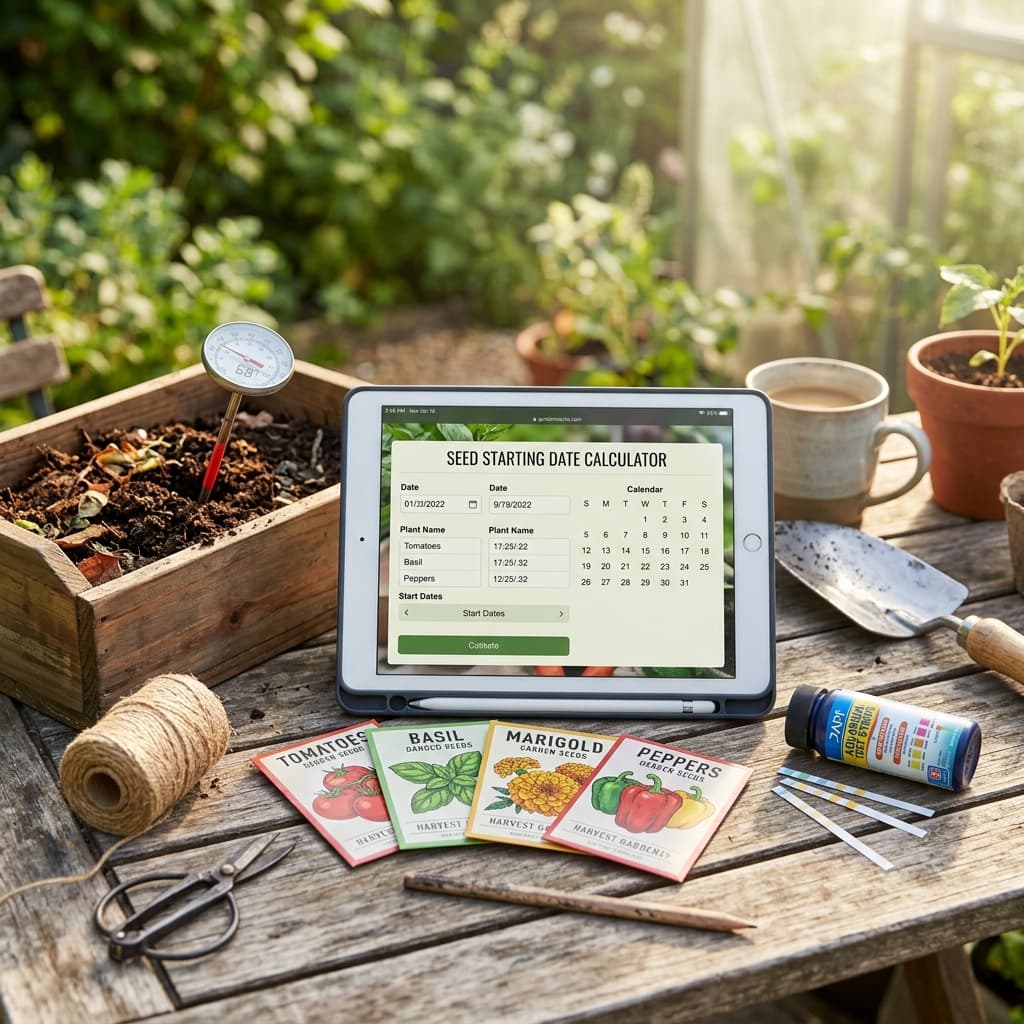
- Seed starting schedules: The seed starting date calculator works backward from your last frost date to tell you exactly when to start each variety indoors. Tomatoes need 6–8 weeks of indoor growth before transplanting; peppers need 8–10. Starting too early produces leggy, root-bound seedlings that transplant poorly. Starting too late means your plants haven't developed enough before going outside, cutting your harvest window short. The calculator eliminates both errors by computing the optimal start date for any vegetable or herb given your local frost dates and the crop's required indoor period.
Together, these two tools form the backbone of an evidence-based planting strategy. Test your seed inventory each winter, discard batches below 70% germination, and use the seed starting calculator to build a precise indoor sowing schedule for every variety you plan to grow. The result is consistent transplant timing, full plant stands, and maximum use of your growing season.
Composting Right: Carbon, Nitrogen, and the Science of Decomposition
Composting is microbiology made practical. The organisms that break down organic matter — bacteria, fungi, actinomycetes — have specific nutritional requirements just like any living system. They need a carbon-to-nitrogen ratio (C:N) between roughly 25:1 and 35:1 to work efficiently. Outside that range, decomposition stalls: too much nitrogen and the pile turns anaerobic and smells; too much carbon and it sits for months without heating up.
The compost ratio calculator takes the guesswork out of pile building by letting you enter the weight and type of each material you're adding — leaves (C:N ~60:1), grass clippings (~20:1), kitchen scraps (~25:1), wood chips (~300:1), manure (~15:1) — and computing the blended ratio of your mix. It tells you whether to add more browns (carbon) or greens (nitrogen) to hit the optimal decomposition window.
A properly balanced compost pile reaches internal temperatures of 130–160°F within 48–72 hours of building. This thermal activity kills weed seeds, pathogens, and insect eggs — turning raw scraps into finished compost in as little as 3–4 weeks with regular turning. An unbalanced pile may take 6–12 months and still not kill weed seeds. Running the ratio calculation before building the pile is the single most impactful thing a home composter can do to improve results.
Animal Care Calculators
Responsible animal husbandry — from backyard chickens to family pets — depends on accurate quantity calculations. Overfeeding, underfeeding, dehydration, and improper waste management are the four most common causes of preventable health problems in captive animals. Each has a calculable solution.
Dog Water Intake Calculator
The dog water intake calculator computes daily hydration needs based on body weight, activity level, temperature, and whether your dog eats wet or dry food. A 70-pound working dog in summer heat may need three times the water of the same dog resting indoors in winter.
Chicken Feed Calculator
The chicken feed calculator estimates daily and weekly feed consumption for your flock based on breed, age, flock size, and production stage. Layer hens in peak production eat approximately 0.25 pounds of feed per bird per day — but this varies significantly by breed and season.
For cat owners, the cat litter calculator estimates weekly and monthly litter consumption based on the number of cats, litter type (clumping vs. non-clumping), and box change frequency. This turns litter purchasing from a guessing game into a predictable subscription-style calculation — useful for bulk buying and ensuring you never run out.
The common thread across all animal care calculators is that accurate inputs (weight, age, breed, activity) produce actionable outputs (daily quantities) that protect animal health. These aren't approximations — they're derived from published veterinary and husbandry research on nutritional requirements and physiological water loss rates at different temperatures and activity levels.
Biology Action Plan
Step 1: Audit Your Aquarium
Run the aquarium volume calculator with your actual tank dimensions and fill level. Use this number as the basis for stocking limits, filtration sizing, and all chemical dosing going forward.
Step 2: Test Your Seed Inventory
Before each growing season, germination-test all stored seed batches using the germination rate calculator. Discard stock below 70% and adjust planting density for borderline batches.
Step 3: Plan Your Sowing Schedule
Enter your last frost date into the seed starting date calculator for each variety you plan to grow. Print the resulting schedule and post it in your growing space as a seasonal reference.
Step 4: Balance Your Compost
Before building or turning a compost pile, use the compost ratio calculator to confirm your C:N ratio is in the 25:1–35:1 range. Adjust materials before building rather than after the pile fails to heat.
FAQs
How do I find my last frost date for the seed starting calculator?
What C:N ratio should I aim for in hot compost?
How accurate is the inch-per-gallon stocking rule for aquariums?
Author Spotlight
The ToolsACE Team
ToolsACE is an independent platform founded in 2023 by a team of software developers and educators. We built ToolsACE because we were frustrated by tools that required sign-ups, tracked your data, or hid answers behind paywalls. Everything we publish is written by people who use these tools themselves — students, engineers, and professionals who understand the problems they're solving.