Your BMI Says You’re “Overweight.” Your Mirror Disagrees. Here’s Why.
A bodybuilder with 8% body fat can have the exact same BMI as someone who has never lifted a weight. That’s not bad math — it’s the wrong tool for the job. Here’s which number to trust, and when.

The Mirror Disagrees With the Math
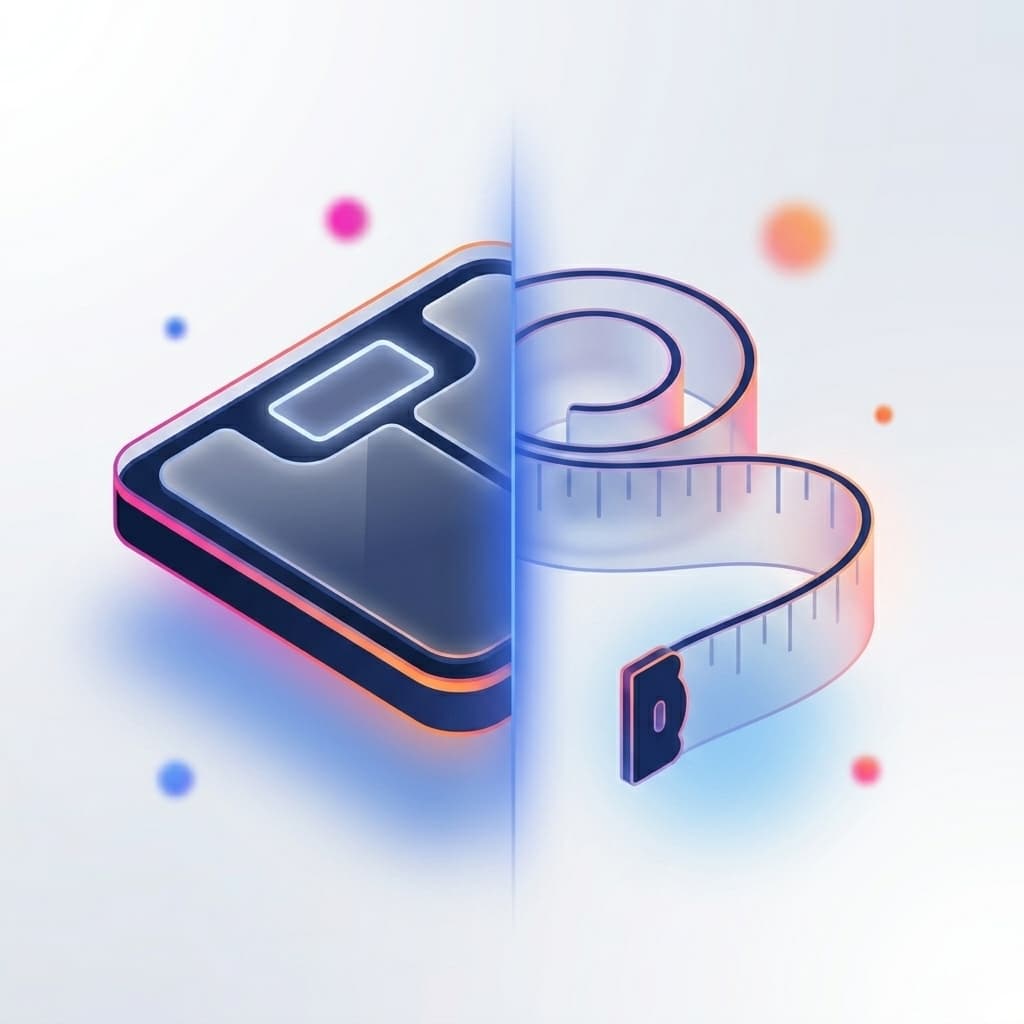
A bodybuilder with 8% body fat can have the exact same BMI as someone who has never lifted a weight in their life. That’s not a flaw in math — it’s a flaw in using the wrong tool for the job. The BMI calculator vs body fat calculator debate isn’t really about which number is “better.” It’s about which number actually answers the question you’re asking.
Millions of people check their BMI every year, get a number that feels off, and walk away confused or discouraged. The truth is that BMI and body fat percentage measure two different things entirely, and using them interchangeably is where most of the confusion starts.
In this article you’ll learn exactly what each calculator measures, how the underlying formulas work, where each one falls short, and — using real numbers — which tool gives you a more honest picture of your health. Both tools live on ToolsACE: the BMI Calculator and the Body Fat Calculator, free and side-by-side.
“BMI tells you what you weigh. Body fat percentage tells you what you’re made of.”
What Each Calculator Actually Measures
Body Mass Index (BMI) is a ratio of your weight to your height, originally developed in the 1830s by Belgian mathematician Adolphe Quetelet — not as a health tool, but as a way to study population averages. Body fat percentage, by contrast, measures the actual proportion of your body that is fat tissue versus lean mass (muscle, bone, organs, water).
This distinction matters more in 2026 than ever. Global health bodies have continued to flag BMI’s limitations, particularly because it cannot distinguish muscle from fat, bone density from soft tissue, or fat distribution patterns that carry different health risks. A person with high visceral fat (the dangerous kind stored around organs) and a person with the same BMI but mostly subcutaneous fat (stored under the skin) face very different health risks — but BMI treats them identically.
Body fat percentage closes that gap. It tells you composition, not just mass. Fitness professionals, physicians tracking metabolic health, and athletes increasingly look past BMI toward body fat percentage and waist-to-hip ratio for a fuller picture.
How the BMI Calculator Works
Two inputs, one division, one category label. The simplest health metric in common use.
Enter Your Height
In centimeters or inches. Stand straight, no shoes — accurate height matters more than people realize.
Enter Your Current Weight
In kilograms or pounds. Use a calibrated scale, ideally morning, post-toilet, pre-meal.
Tool Divides Weight by Height Squared
Single arithmetic operation: BMI = kg ÷ m². No body composition data needed, no inputs beyond these two.
Result Matched Against Standard Categories
Underweight (under 18.5), Normal (18.5–24.9), Overweight (25–29.9), Obese (30+). Same scale globally for adults.
How the Body Fat Calculator Works
Navy Method — the most common online formula. Tape measure required, lab equipment not.
Enter Your Height
Same as BMI input — exact height in cm or inches.
Enter Your Neck Circumference
Measure just below the larynx. Tape snug, not compressing skin.
Enter Your Waist Circumference
For men: at the navel level. For women: at the narrowest point. Plus hip circumference if female.
Logarithmic Formula Estimates Fat Percentage
Navy Method uses log10 of circumference ratios. Output: percentage body fat — composition, not mass.
“Pro Tip: Measure your waist and neck in the morning, before eating, with the tape snug but not compressing the skin. Inconsistent measurement time of day is the single biggest cause of inaccurate body fat readings.”
The Formulas Explained
The BMI formula is straightforward:
BMI Formula
BMI = weight (kg) ÷ height (m)²
Navy Body Fat (Men)
% = 86.010 × log10(waist − neck) − 70.041 × log10(height) + 36.76
Example: an 80 kg person at 1.75 m has BMI = 80 ÷ (1.75 × 1.75) = 80 ÷ 3.06 = 26.1 — “overweight” category. Same person, waist 85 cm, neck 38 cm → estimated body fat lands around 16–18%, which falls in the “fitness” range for men. Meaningfully different verdict.
| Metric | Input Needed | Formula Type | Output |
|---|---|---|---|
| BMI | Weight, height | Simple division | Category (underweight–obese) |
| Body Fat % | Neck, waist, hip, height | Logarithmic | Percentage of fat mass |
Which Is Better?
Neither tool is universally “better” — each serves a different purpose.
| Factor | BMI Calculator | Body Fat Calculator |
|---|---|---|
| Speed | Instant, 2 inputs | Slightly longer, 3–4 inputs |
| Accounts for muscle | No | Yes |
| Best for | Population screening | Individual composition |
| Accuracy for athletes | Poor | Good |
| Equipment needed | Scale | Scale + tape measure |
| Reflects health risk | Loosely | More directly |
Recommendation: Use BMI as a quick, rough screening tool — useful for tracking general trends over time. Use body fat percentage when you actually want to know your composition, especially if you exercise regularly, lift weights, or have a body type BMI tends to misclassify.
BMI for Quick Screens
2 inputs, instant result. Fine for population-level checks, doctor-visit screening, and general trends over years.
Body Fat % for Real Composition
If you train, lift, or carry above-average muscle, BMI lies. Body fat % reveals what’s actually under the surface.
Real-World Examples
The Athlete Getting a False “Overweight” Label
A rugby player with significant muscle mass often lands in BMI’s “overweight” range simply because muscle weighs more than fat by volume. A body fat calculator reveals what’s actually happening: low fat percentage, high lean mass — the opposite of what BMI suggests.
The Office Worker With “Normal” BMI but High Visceral Fat
Someone with a sedentary lifestyle can sit comfortably in BMI’s “normal” range while carrying a higher-than-healthy body fat percentage, particularly around the midsection. This is sometimes called being “skinny fat,” and BMI alone will never catch it.
The Parent Tracking a Teenager’s Growth
Pediatric health tracking still relies heavily on BMI-for-age percentiles because body fat formulas designed for adults aren’t reliable for growing bodies. This is one of the few scenarios where BMI remains the more appropriate tool.
Someone Asking: Is BMI Accurate for Athletes?
One of the most searched questions on this topic. Honest answer: no, not reliably. Athletes with dense muscle mass are frequently misclassified by BMI, which is exactly why coaches and trainers lean on body fat percentage, skinfold calipers, or bioelectrical impedance scales instead.
Common Mistakes to Avoid
Comparing BMI Across Different Body Types
A bodybuilder and a sedentary person with the same BMI are not equally healthy. BMI was never designed to account for muscle distribution.
Measuring Body Fat Inconsistently
Measuring your waist after a big meal one day and on an empty stomach the next produces wildly different results. Stick to one consistent time, ideally morning.
Treating Either Number as a Diagnosis
Both BMI and body fat percentage are screening estimates, not medical diagnoses. A high or low number should prompt a conversation with a healthcare provider, not panic.
Ignoring Waist Circumference Entirely
Many people fixate on BMI or body fat percentage but skip waist measurement, even though waist size is one of the strongest indicators of visceral fat risk on its own.
Using Outdated or Incorrect Measurement Points
Measuring the waist at the belly button instead of the navel-adjacent narrowest point, or measuring the neck too high or low, throws off both BMI accuracy comparisons and body fat estimates.
Expert Tips for Accurate Results
Measure at the Same Time of Day, Every Time
Ideally first thing in the morning before eating or drinking, when bloating and water retention are at their lowest.
Use a Flexible, Non-Stretch Tape Measure
A stretchy tape gives inconsistent waist and neck readings. Invest in a fitness tape — they cost under $5.
Track Trends, Not Single Readings
One BMI or body fat reading means little. Track monthly to see whether your composition is actually changing.
Pair Body Fat With Strength or Fitness Markers
A dropping body fat percentage alongside increasing strength is a far better health signal than either number alone.
Run Both Calculators Side by Side
On ToolsACE you can calculate BMI and body fat percentage back-to-back, making it easy to spot when the two numbers tell conflicting stories — and know which to trust.
Same Person, Two Numbers:
80kg @ 1.75m, BMI
26.1 overweight
Same Person, Body Fat
16–18% fitness range
Why ToolsACE for Health Tracking
ToolsACE offers over 500 free tools, including both the BMI Calculator and Body Fat Calculator used in the examples above, with zero sign-up and zero payment required.
- Instant browser execution. No waiting, no email gate, no hidden “premium” tier blocking the result.
- Privacy by default. Your height, weight, and body measurements are personal data — no account required to store or process them.
- Mobile-friendly. Run a quick BMI or body fat check from your phone between sets at the gym or during a lunch break.
- No intrusive ads. Clean calculator experience, no pop-ups breaking concentration mid-result.
- Free permanently. Not a trial. Not a freemium tease. Free forever.
Who Should Use Which Calculator
Fitness Enthusiasts and Gym-Goers
If you train regularly, body fat percentage tracks your progress far more honestly than BMI — especially as you build muscle while losing fat, a combination BMI can’t detect since total weight may barely change.
Healthcare-Conscious Adults
For general health screening without a gym routine, BMI is a fast, simple starting point — best used alongside waist circumference for a fuller risk picture.
Parents Monitoring Kids’ Growth
BMI-for-age percentiles remain the standard tool for tracking healthy childhood growth, making BMI calculators more relevant here than body fat tools.
Small Business Wellness Programs
Companies running employee wellness initiatives often use BMI as a quick, low-barrier baseline metric, since it requires no specialized measuring and takes seconds per employee.
BMI vs Body Fat FAQs
What's the main difference between a BMI calculator and a body fat calculator?
Which is more accurate, BMI or body fat percentage?
Can I calculate both BMI and body fat percentage for free?
What is considered a healthy body fat percentage?
Why is my BMI high but I don't look overweight?
Is BMI accurate for athletes?
How often should I check my body fat percentage?
What inputs does a body fat calculator need?
Does BMI account for muscle mass?
What's the formula for calculating BMI manually?
Can two people have the same BMI but very different body fat percentages?
Is the Navy Method the most accurate body fat calculation available online?
Should doctors rely on BMI alone to assess patient health?
How do I calculate body fat percentage at home without calipers?
Why do BMI and body fat calculators sometimes give conflicting health categories?
Author Spotlight
The ToolsACE Team
ToolsACE is an independent platform founded in 2023 by a team of software developers and educators. Our editorial team writes, researches, and reviews every article and tool guide on this site. We built ToolsACE because we were frustrated by tools that required sign-ups, tracked your data, or hid answers behind paywalls.