Fuel Mileage MPG Calculator: Close the Gap Between Sticker and Real-World MPG
Your car's EPA sticker MPG and your real-world fuel economy can differ by 20% or more. Learn how to calculate your actual MPG and identify the habits destroying your efficiency.

Real MPG vs the EPA Sticker
The EPA tests vehicles under controlled laboratory conditions: constant temperature, no wind, no passengers, no cargo, and a standardized drive cycle. Real-world driving introduces variables that systematically reduce efficiency below the sticker figure.
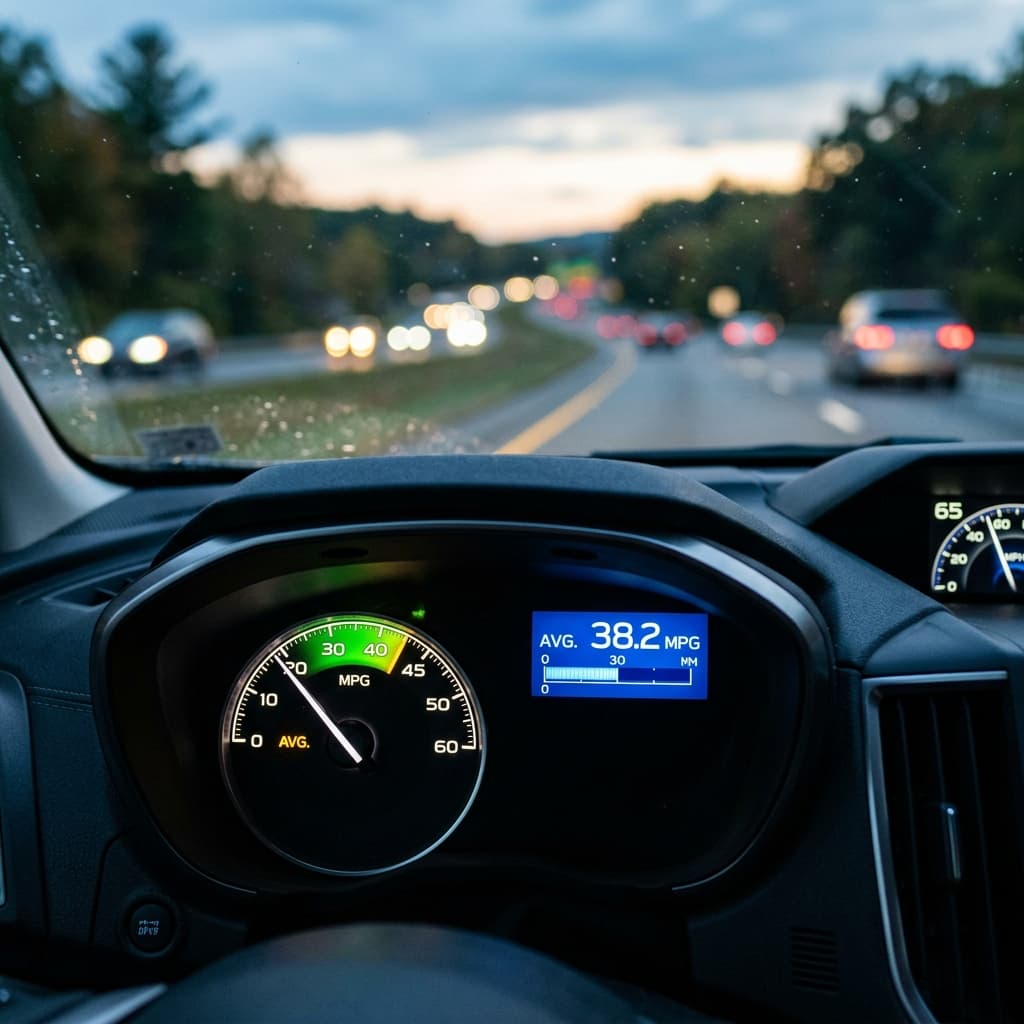
On average, drivers achieve 80-85% of their vehicle's EPA combined rating. A car rated at 28 MPG combined often delivers 22-24 MPG in daily driving, particularly in cities with frequent stops and short trips that never allow the engine to reach optimal operating temperature.

The MPG Reality Gap:
EPA sticker rating
28 MPG combined estimate
Real-world with bad habits
22 MPG 21% efficiency loss
How to Calculate Your Actual MPG
The most accurate method: fill your tank completely, reset your trip odometer to zero, drive normally until you need to refuel, then fill the tank again completely. Divide the miles driven by the gallons used in the second fill. That is your real MPG for that tank.
Our Fuel Mileage Calculator does this instantly. Enter your starting and ending odometer readings plus gallons added and get your MPG along with estimated annual fuel cost at your local gas price.
For best accuracy, track at least three tanks and average the results. Single-tank MPG varies significantly based on trip mix, temperature, and traffic.
Four Driving Habits That Destroy MPG
Driving style accounts for up to 30% of real-world fuel economy variation between drivers of the same vehicle. These four habits are the biggest culprits.
| Bad Habit | MPG Impact | Fix |
|---|---|---|
| Aggressive acceleration | Up to -15% | Accelerate gently over 5-10 seconds |
| Hard braking | Up to -5% | Anticipate stops and coast to decelerate |
| Idling over 60 seconds | Up to -7% | Turn off engine for stops over 1 minute |
| Highway speeds above 75 mph | Up to -14% | Stay at 65-70 mph on highways |
Use Cruise Control
Maintaining a steady speed on highways eliminates micro-accelerations that waste fuel. Cruise control can improve highway MPG by 3-7%.
Reduce Roof Load
A roof cargo carrier increases drag and reduces fuel economy by up to 17% at highway speeds. Remove it when not in use.
Maintenance Wins That Boost MPG
Proper vehicle maintenance is not just about reliability — it directly impacts fuel economy. These maintenance items consistently show measurable MPG improvements.
Tire Pressure
Under-inflated tires increase rolling resistance. Each 1 PSI below recommended pressure reduces MPG by about 0.2%. Check monthly — tires lose 1 PSI per month naturally.
Air Filter
A clogged air filter restricts airflow to the engine, forcing it to work harder. A clean filter can improve MPG by up to 10% on older vehicles with carbureted engines.
Spark Plugs
Worn spark plugs misfire and force multiple ignition attempts per cycle. Replacing them at the manufacturer interval restores proper combustion efficiency.
Oxygen Sensor
A faulty O2 sensor prevents the engine from optimizing the air-fuel mixture. Replacing a failing sensor can improve MPG by up to 40% in extreme cases.
Annual Savings Math
The financial impact of improving fuel economy compounds over a full year. Here is the math for a driver covering 12,000 miles annually at $3.50/gallon.
At 22 MPG: 545 gallons per year = $1,909 annual fuel cost. At 28 MPG: 429 gallons per year = $1,500 annual fuel cost. The difference is $409 per year saved simply by improving driving habits and staying on top of maintenance.
“Every MPG of improvement on a 12,000-mile/year driver is worth roughly $70 per year at current gas prices. Track your actual MPG to know what you're working with.”
MPG FAQs
Why is my MPG so much lower in winter?
Does brand of gasoline affect MPG?
Should I use premium gas if my car recommends regular?
Author Spotlight
The ToolsACE Team
ToolsACE is an independent platform founded in 2023 by a team of software developers and educators. Our editorial team writes, researches, and reviews every article and tool guide on this site. We built ToolsACE because we were frustrated by tools that required sign-ups, tracked your data, or hid answers behind paywalls. Everything we publish is written by people who use these tools themselves — students, engineers, and professionals who understand the problems they're solving.