Macros Demystified: How a Macro Calculator Turns Diet Goals into Daily Numbers
A macro calculator splits your daily calorie target into protein, carbs, and fat — the difference between losing weight well and just losing weight. Learn the formula, the goal-specific splits, and why protein is always the first decision.

Calories Decide. Macros Shape.
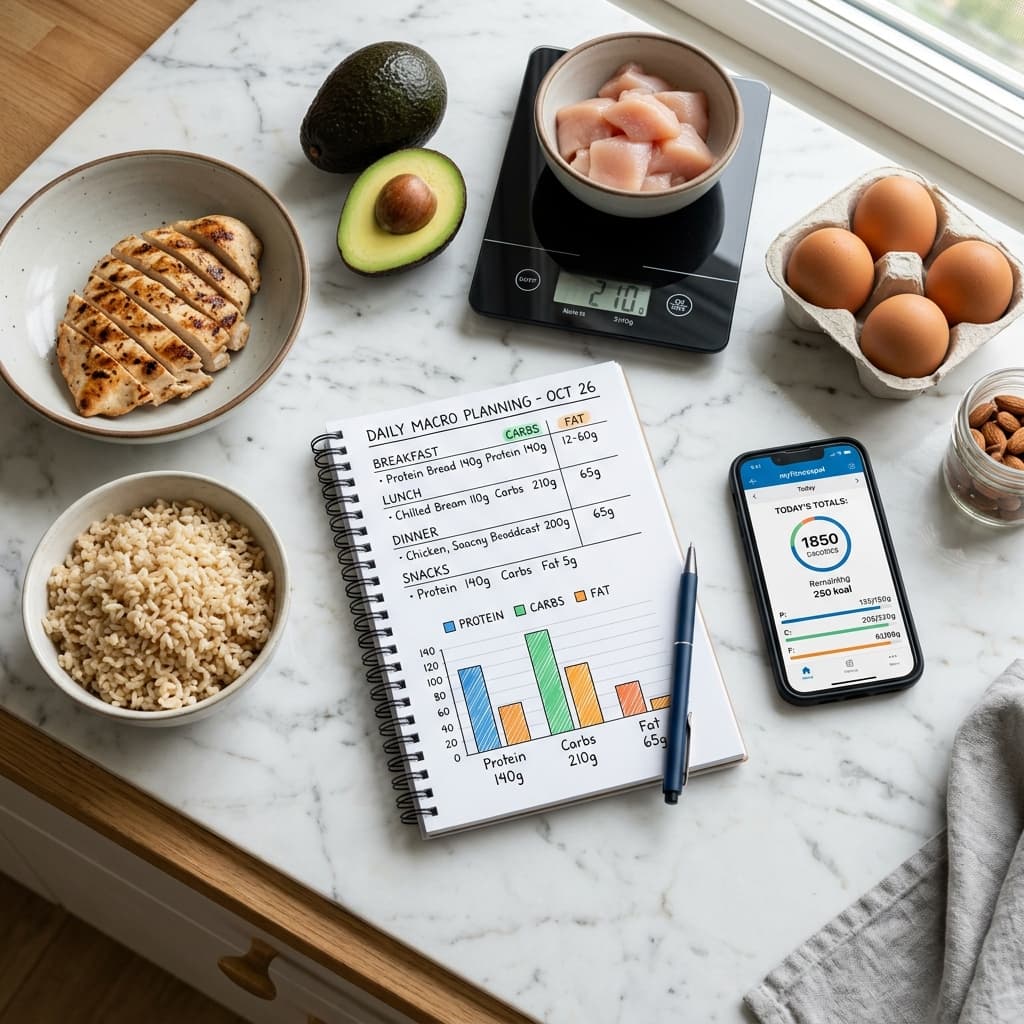
Two people eat 2,000 calories a day for 12 weeks. One ends up leaner, stronger, and energetic. The other ends up smaller but flabby, tired, and constantly hungry. Same calories. Wildly different outcomes. The difference is macros.
A macro calculator splits your daily calorie target into the three macronutrients that determine what kind of weight moves — protein, carbohydrates, and fat. Calories decide direction. Macros decide quality.
The ToolsACE Macro Calculator takes your TDEE-based calorie target and your goal (cut, maintain, bulk) and returns the exact gram split you should eat each day. Pair it with the TDEE calculator for the calorie input and you have a complete plan.
"You can hit your calorie number every day for a year and still build the wrong body. Macros are how you stop that."
What Macros Actually Are
Macronutrients are the three classes of nutrient that supply energy:
- Protein — 4 calories per gram. Builds and preserves muscle, drives satiety, has the highest thermic effect (you burn 20–30% of its calories just digesting it).
- Carbohydrates — 4 calories per gram. The body's preferred fuel for high-intensity activity, brain function, and recovery.
- Fat — 9 calories per gram. Drives hormone production, vitamin absorption, and satiety on lower-volume diets.
Alcohol provides 7 calories per gram but contributes nothing nutritionally — many calculators silently ignore it, which is fine for planning but means you have to budget for it manually.
The Macro Split Formula
From % to Grams
protein g = (calories × %P) / 4
carbs g = (calories × %C) / 4
fat g = (calories × %F) / 9
Sanity Check
%P + %C + %F = 100%
So at 2,200 kcal with a 30/40/30 split (protein/carbs/fat), you'd aim for 165 g protein, 220 g carbs, 73 g fat daily. That's a solid moderate-activity maintenance template for most adults.
Pro practice is to start by setting protein in grams (not percent), then setting fat in grams to a sensible floor, and letting carbs fill the remaining calories. The calculator follows this same logic under the hood.
Splits by Goal
Goal changes which macro takes priority. These are evidence-based starting points:
- Fat loss (cut): 35–40% protein, 30–40% carbs, 20–30% fat. Higher protein protects muscle in a deficit.
- Maintenance: 25–30% protein, 40–50% carbs, 25–30% fat. Balanced and sustainable.
- Lean bulk: 25–30% protein, 45–55% carbs, 20–30% fat. Carbs fuel training; surplus fuels growth.
- Endurance training: 20–25% protein, 55–65% carbs, 15–25% fat. Glycogen is king for runners and cyclists.
- Low-carb / keto: 25–30% protein, 5–10% carbs, 65–70% fat. Specific therapeutic and athletic use cases; not strictly necessary for general fat loss.
Why Protein Comes First
Of the three macros, protein is the only one with a non-negotiable target backed by decades of research. Three reasons:
- Muscle preservation in a deficit. Cutting calories without enough protein loses muscle along with fat. Active adults need 1.6–2.2 g per kg of bodyweight; the protein calculator sets this precisely.
- Satiety. Gram for gram, protein keeps you fuller longer than carbs or fat. Higher protein diets consistently make hunger easier to manage.
- Thermic effect. 20–30% of protein calories are burned in digestion vs. 5–10% for carbs and 0–3% for fat. Higher protein = slightly more calories spent processing food.
Set protein first. Set fat to a healthy floor (about 0.7–1.0 g/kg). Let carbs absorb the rest.
Lock Protein, Flex the Rest
Hit protein every day. Treat carbs and fat as flexible — high-carb on training days, lower-carb on rest days, with fat absorbing the difference.
Don't Drop Fat Too Low
Below 0.5 g/kg fat for extended periods can disrupt hormone production. The fat intake calculator ensures you stay above the floor.
Companion Nutrition Tools
Macros sit at the centre of the nutrition toolkit. The full set:
- TDEE Calculator — the daily calorie number macros split. Start here. Full breakdown in our TDEE guide.
- Calorie Calculator — goal-specific daily target.
- Protein Calculator — the most important macro lever.
- Fat Intake Calculator — sets the healthy fat floor.
- BMR Calculator — metabolism baseline.
- Calories Burned Calculator — activity-day adjustments.
- BMI Calculator — quick directional check; full context in our BMI guide.
A Two-Week Adoption Routine
Day 1: Calculate Your Baseline
Run TDEE first, then plug it into the macro calculator with your goal selected. Note the protein, carb, and fat targets in grams.
Days 2–7: Hit Protein, Approximate the Rest
Use a tracking app to log every meal. Aim to hit protein within 5g; carbs and fat within 20g. Don’t obsess about perfection.
Day 8: Review the Trend
How did energy, hunger, and training feel? Tweak: too tired = bump carbs 20–30g. Too hungry = bump protein 10–20g.
Days 9–14: Lock In
With the adjusted targets, run a clean second week. By day 14 you should know what 165g protein looks like on a plate without checking the app.
Macro Math Reality:
Protein for Active Adults
1.6–2.2 g / kg bodyweight
Healthy Fat Floor
0.7+ g / kg bodyweight
Macro Calculator FAQs
Do I need to track macros forever?
What if I miss my macro targets by a little?
Can I follow a macro plan as a vegetarian or vegan?
Is fibre a macronutrient?
Does the time of day matter for macros?
Author Spotlight
The ToolsACE Team
ToolsACE is an independent platform founded in 2023 by a team of software developers and educators. Our editorial team writes, researches, and reviews every article and tool guide on this site. This guide is an educational resource and does not replace personalised advice from a qualified dietitian or clinician.