TDEE Decoded: How Your Daily Calorie Number Drives Every Fitness Goal
Total Daily Energy Expenditure is the single most useful number in nutrition. Learn how a TDEE calculator combines BMR, activity, and goals to give you the precise calorie target for cutting, maintaining, or bulking.

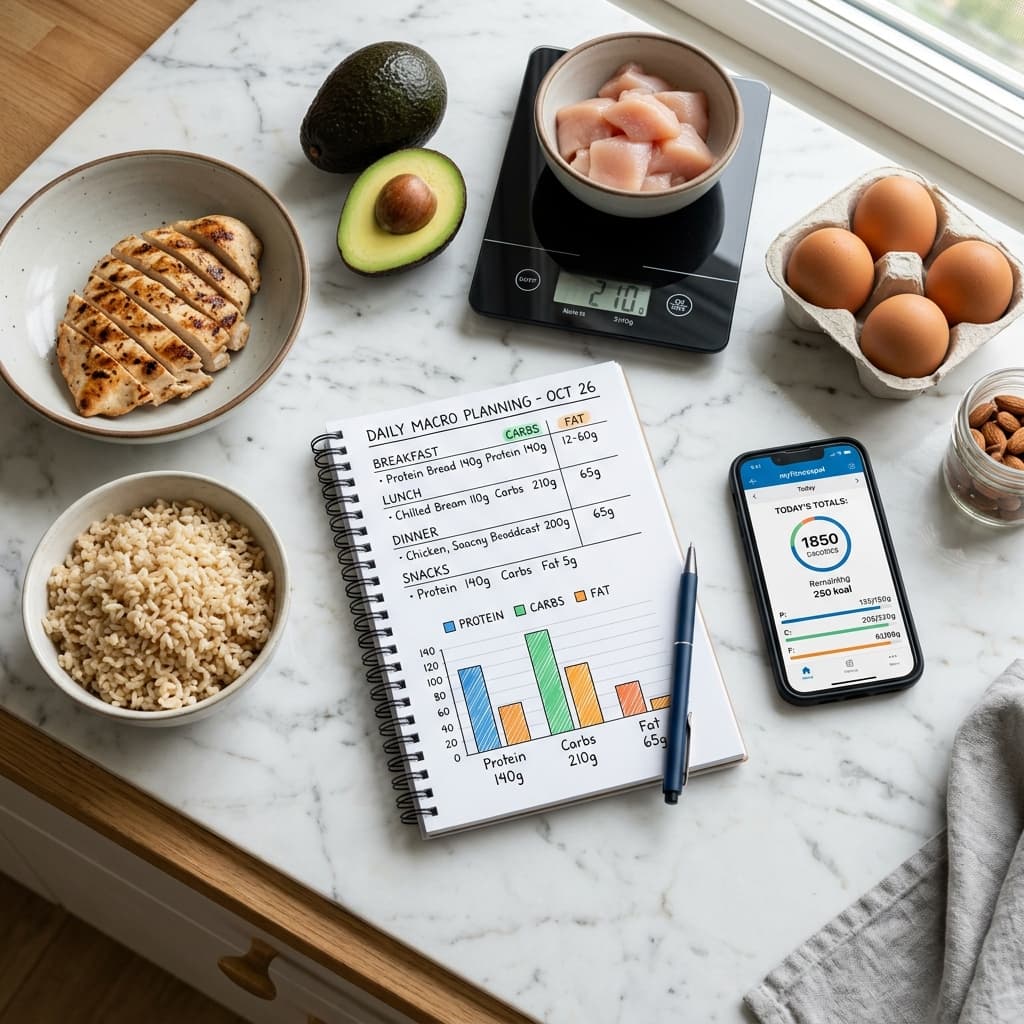
Your Daily Calorie Anchor
Every fitness goal — lose 10 kg, build muscle, run a faster 10K, just stop feeling tired at 3 p.m. — eventually collapses into the same question: how many calories should I eat today?
Guess too high and the scale drifts the wrong way for months before you notice. Guess too low and you feel exhausted, lose muscle, and quit by week six. The sweet spot — your maintenance number, plus or minus a deliberate offset — is what TDEE gives you in 30 seconds.
The ToolsACE TDEE Calculator turns four inputs (age, height, weight, activity) into the calorie number every nutrition app, coach, and dietitian builds plans around. Pair it with the calorie calculator for goal-specific targets and you have the entire foundation of evidence-based nutrition in two tools.
"You cannot out-train a calorie target you have never bothered to calculate."
BMR vs. TDEE: Two Numbers, One Story
Two numbers describe your daily energy expenditure, and they are not interchangeable.
- BMR (Basal Metabolic Rate): the calories you would burn if you stayed in bed all day. Roughly 60–70% of total expenditure for most adults. Use the BMR calculator to find yours.
- TDEE (Total Daily Energy Expenditure): BMR plus everything else — walking, fidgeting, training, digesting food. This is the number that determines whether you lose, maintain, or gain weight.
BMR is the floor. TDEE is the actual ceiling you eat against. The maintenance calorie calculator is just a TDEE result framed for the "stay the same weight" goal.
The Formula Behind TDEE
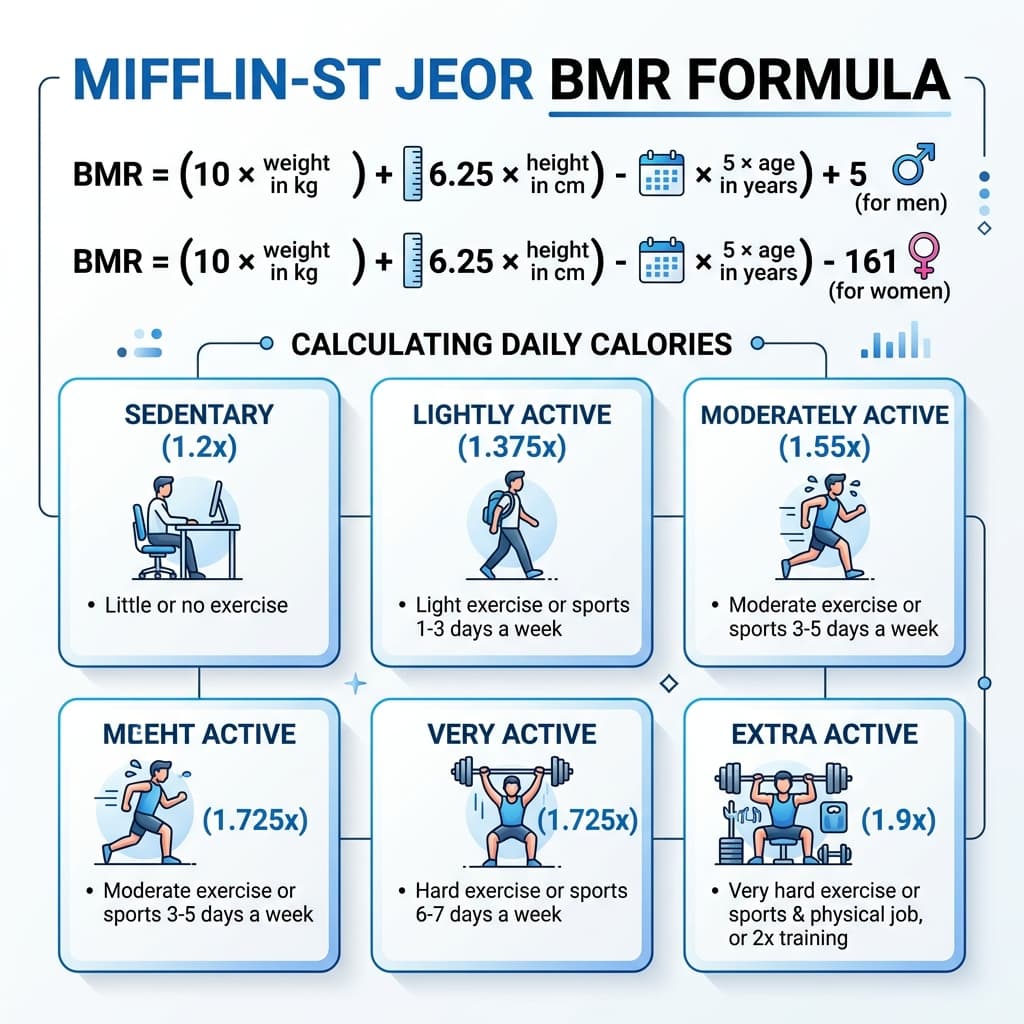
Most modern calculators use the Mifflin-St Jeor equation for BMR — the most accurate widely-validated formula for the general population — then multiply by an activity factor to land on TDEE.
BMR (Mifflin-St Jeor, kcal/day)
Men: 10W + 6.25H − 5A + 5
Women: 10W + 6.25H − 5A − 161
TDEE
TDEE = BMR × activity multiplier
W = weight (kg) · H = height (cm) · A = age (years)
So a 30-year-old woman, 165 cm, 65 kg has a BMR of roughly 1,376 kcal. At a moderate activity multiplier of 1.55 her TDEE lands around 2,133 kcal/day. That is the calorie level at which her weight stays flat.
Picking the Right Activity Multiplier
This is where most people break the calculation. Self-reported activity is wildly optimistic — standard research shows people overestimate their activity level by 20–40%. Be honest:
- 1.2 – Sedentary: desk job, little to no formal exercise.
- 1.375 – Lightly active: light exercise 1–3 days/week or a job involving walking.
- 1.55 – Moderately active: moderate exercise 3–5 days/week.
- 1.725 – Very active: hard exercise 6–7 days/week.
- 1.9 – Extra active: physical job plus serious training, or twice-a-day athletes.
If you are not sure between two levels, pick the lower one. Your body will tell you within two weeks whether you guessed right.
Cut, Maintain, or Bulk
Once you have a trustworthy TDEE, every goal becomes arithmetic.
- Fat loss: subtract 15–25% from TDEE. A 500 kcal deficit yields roughly 0.45 kg/week of fat loss while preserving muscle when paired with adequate protein.
- Maintenance: eat at TDEE. Use this phase between cutting and bulking to lock in changes and reset metabolic adaptation.
- Lean bulk: add 5–15% to TDEE. A 250–400 kcal surplus is enough to build muscle without piling on fat.
Aggressive deficits (40%+ below TDEE) usually backfire — muscle loss, hormonal disruption, and binges. Slow, steady offsets win every time.
Deficit That Sticks
A 15–20% deficit is sustainable for 8–12 weeks. Anything steeper rarely lasts past month two.
Surplus That Builds
+250 kcal/day plus progressive lifting builds muscle with minimal fat gain. Tracking is the difference between bulk and bloat.
Beyond TDEE: Macros & Protein
Calories decide whether your weight moves. Macros decide what kind of weight moves — muscle or fat — and how you feel along the way. Once your TDEE is dialled in, layer these tools on top:
- Macro Calculator — splits your calorie target into protein, carbs, and fat based on goal.
- Protein Calculator — the single most important macro for body composition. 1.6–2.2 g/kg for active adults.
- Fat Intake Calculator — ensures hormone production stays healthy during deficits.
- Calories Burned Calculator — quantifies activity-day expenditure for cleaner refeed math.
- BMI Calculator — useful as a quick directional check, not a target. See the full BMI guide for context.
Together these turn a single calorie number into a complete fuel plan.
A 4-Week Calibration Routine
Run TDEE on Day 1
Plug your real weight, height, age, and an honest activity level into the TDEE calculator. Note the result.
Eat at That Number for 14 Days
Track everything. Use a food scale for the first week so the data is real, not vibes.
Compare Weight Trend on Day 14
Stable weight (within ~0.5 kg) means TDEE is correct. Drift up or down means your activity multiplier was off — adjust by 100–150 kcal/day and retest.
Apply Your Goal Offset
Once your true maintenance is known, subtract for cut or add for bulk. Re-run TDEE every 4–6 weeks as weight changes.
TDEE in Numbers:
Sustainable Cut
15–20% below TDEE
Lean Bulk Surplus
+250 kcal/day
TDEE Calculator FAQs
How accurate is a TDEE calculator?
Should I recalculate TDEE as I lose weight?
What is the difference between TDEE and maintenance calories?
Can I use TDEE if I do intermittent fasting?
Why am I not losing weight even though I eat below TDEE?
Author Spotlight
The ToolsACE Team
ToolsACE is an independent platform founded in 2023 by a team of software developers and educators. Our editorial team writes, researches, and reviews every article and tool guide on this site. We built ToolsACE because we were frustrated by tools that required sign-ups, tracked your data, or hid answers behind paywalls. Everything we publish is written by people who use these tools themselves — athletes, coaches, and clinicians who understand the problems they're solving.