Monthly Budget Planner: The System That Actually Sticks
Most budgets fail by week three. This guide reveals why, then walks you through three proven frameworks so you can find the one that matches how your brain works.

Why Budgets Fail by Week Three
The number one reason budgets fail is not lack of discipline. It is that most people build budgets that leave no room for enjoyment. When every dollar is allocated to necessities and savings with nothing for fun, the first dinner out or spontaneous purchase feels like failure.
The second reason: budgets are often built around ideal months rather than real ones. Car registration, birthday gifts, and medical copays do not appear in January's budget but they derail it anyway. A real budget accounts for irregular expenses by spreading them across months.

Budget Survival Stats:
Budgets that fail by week 3
78% due to zero fun money
Budgets with fun money built in
3x more likely to succeed
The solution is choosing a framework that matches your personality, then building flexibility into it from day one.
The 50/30/20 Rule
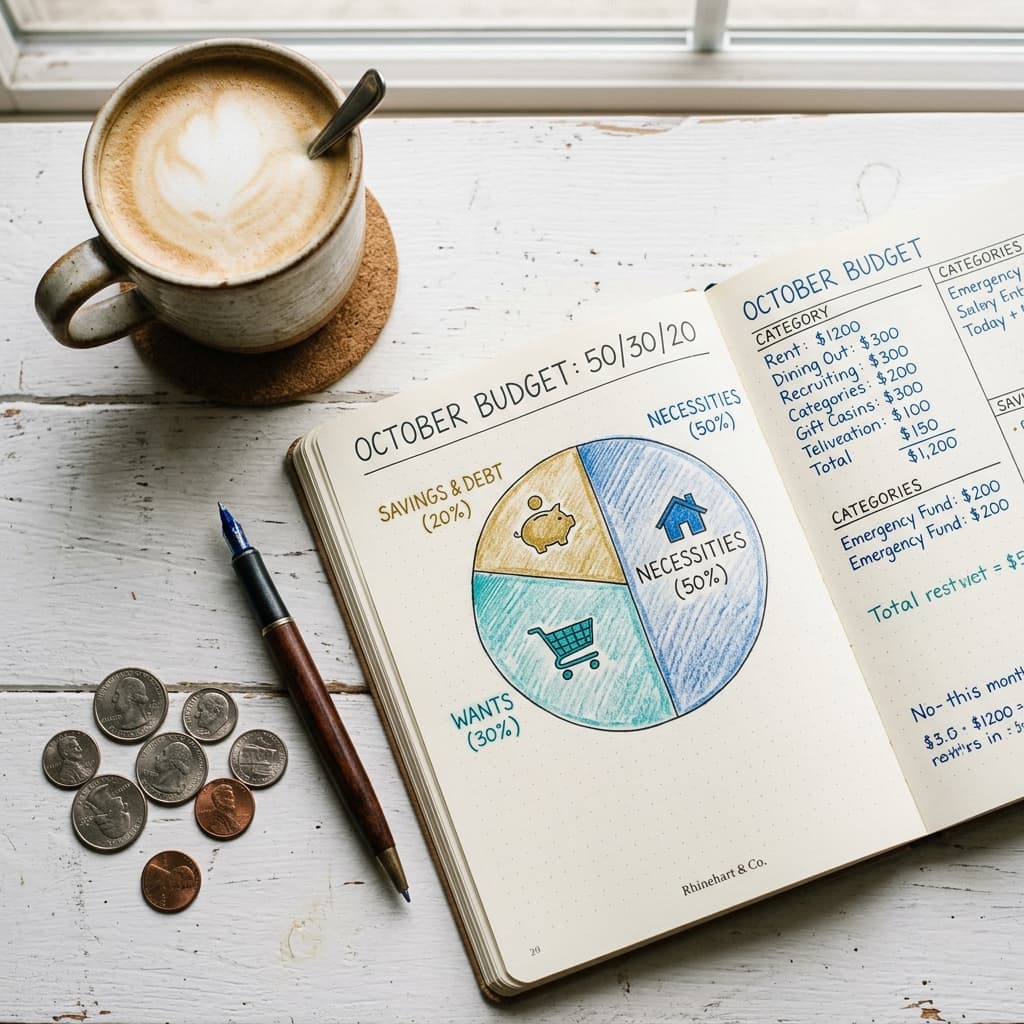
Made popular by Senator Elizabeth Warren's personal finance book, the 50/30/20 rule divides your after-tax income into three buckets: 50% for needs, 30% for wants, and 20% for savings and debt repayment.
Needs include rent, groceries, utilities, insurance, and minimum debt payments. Wants cover dining out, subscriptions, entertainment, and clothing beyond basics. Savings covers emergency fund, retirement contributions, and extra debt payments.
Best For Beginners
The 50/30/20 rule requires no detailed tracking. If you stay within the three percentages, you are on track regardless of how you spend within each bucket.
Adjust the Ratios
High cost-of-living cities may require 60% for needs. High earners can push savings to 30%. The framework is a starting point, not a rigid rule.
Zero-Based Budgeting
In zero-based budgeting, every dollar has a job. You start with your monthly income and assign every single dollar to a category until you reach zero. Unlike 50/30/20, there is no leftover money — it all gets allocated intentionally.
This method requires more effort but produces the highest level of financial awareness. People using zero-based budgeting consistently report being shocked at how much they were spending on categories they did not consciously value.
The Envelope Method
Originally a physical cash system, the envelope method assigns a fixed cash amount to each spending category at the start of the month. When an envelope is empty, spending in that category stops until next month.
Digital versions using separate sub-accounts or budgeting apps achieve the same psychological effect. The physical limitation of an empty envelope creates a hard stop that credit cards never do.
List Variable Spending Categories
Groceries, dining, entertainment, personal care, clothing. Fixed expenses like rent do not need envelopes since they do not fluctuate.
Set Monthly Limits Based on History
Pull three months of bank statements and average your actual spending per category. Start with realistic limits, not aspirational ones.
Fund Envelopes on Payday
Move cash or transfer funds to sub-accounts immediately when income arrives. Pre-funded envelopes remove the temptation to overspend mid-month.
Review and Adjust Monthly
If one envelope is always empty by week two and another always has leftovers, rebalance. The goal is a system that matches real life, not a perfect plan on paper.
Tools That Actually Stick
The best budgeting tool is the one you check weekly. Spreadsheets work for analytical people. Apps work for those who need mobile convenience. The key is reducing friction — the more steps required to log a transaction, the less likely you will do it consistently.
Our Budget Planner lets you input income, set category limits, and see your allocation instantly. No account connection required, no ads, no data tracking. Just a fast, honest look at your monthly money.
“A budget is not a restriction on your freedom. It is a plan for spending on what matters most to you.”
Budget FAQs
How detailed should my budget categories be?
What do I do when I go over budget?
Should I budget with gross or net income?
Author Spotlight
The ToolsACE Team
ToolsACE is an independent platform founded in 2023 by a team of software developers and educators. Our editorial team writes, researches, and reviews every article and tool guide on this site. We built ToolsACE because we were frustrated by tools that required sign-ups, tracked your data, or hid answers behind paywalls. Everything we publish is written by people who use these tools themselves — students, engineers, and professionals who understand the problems they're solving.