The Smart Garden: How Home & Garden Calculators Maximize Your Harvest in 2026
Seed starting dates, germination rates, compost ratios, aquarium volumes — every garden and home project has precise math that separates guesswork from results.

The Smart Garden
Home gardening has seen an extraordinary resurgence over the past several years, driven by interest in food self-sufficiency, mental health benefits of outdoor activity, and the satisfaction of growing what you eat. But enthusiasm without planning produces disappointment: seeds started too late, compost piles that never heat, aquariums that kill fish, and harvest windows missed by a few critical weeks.
The gap between a struggling garden and a thriving one is almost always informational rather than physical. The soil, seeds, tools, and space are all present in both cases. What differs is whether the gardener knows the germination rate of their seed stock, the optimal carbon-to-nitrogen ratio for active composting, the exact dates to start each variety given their local frost schedule, and the true volume of their growing containers and water features.
These are all calculable numbers. ToolsACE provides a suite of home and garden calculators that make this information immediately accessible. This guide walks through every tool in the collection with practical guidance on when and how to use each one.
"A good garden is not an accident. It is the result of dozens of small, calculable decisions made at the right time with accurate information."
Seed & Germination
Every productive vegetable garden begins with two decisions made weeks or months before anything goes in the ground: which seeds to use and when to start them. Both decisions benefit enormously from calculation rather than estimation.
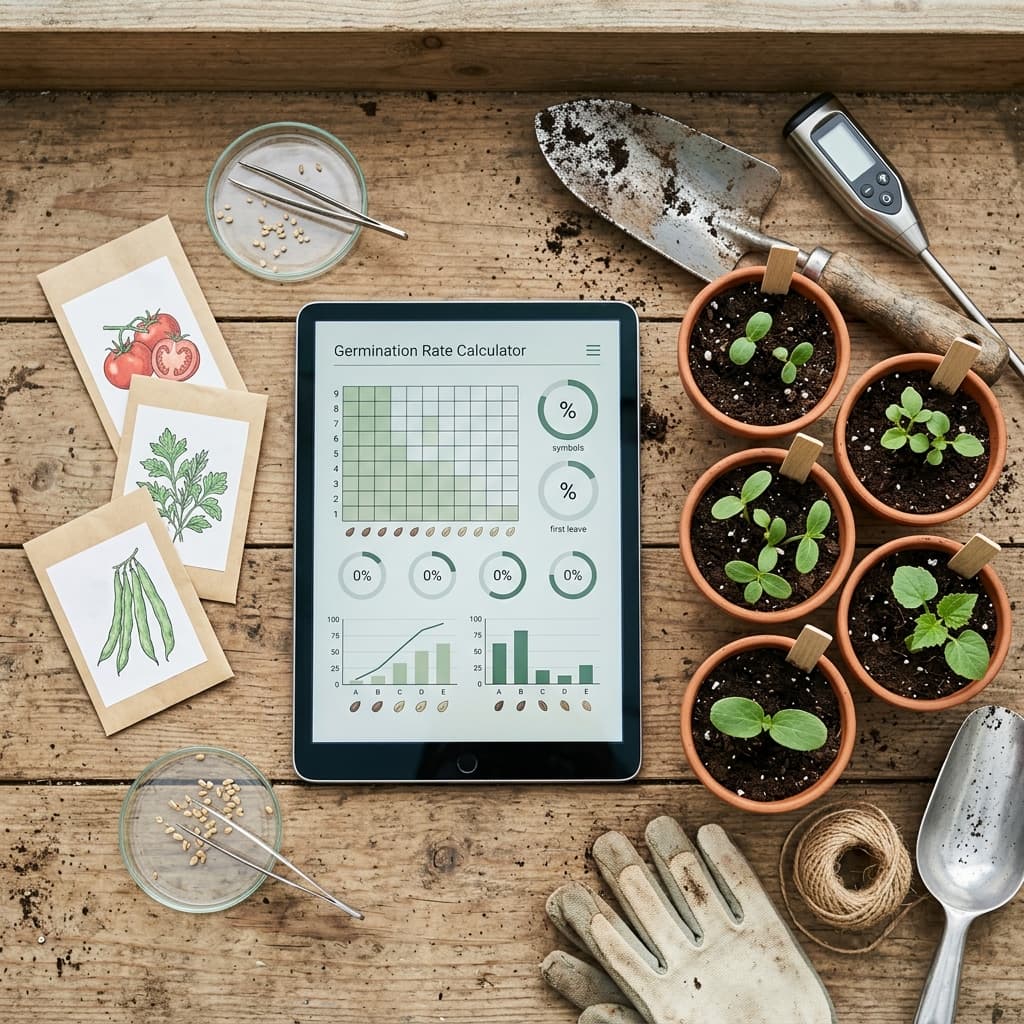
Germination Rate Calculator
Test a sample of seeds from any batch and enter the count of sprouted vs. total placed. The germination rate calculator gives you the percentage viability and recommends adjusted seeding density. Below 60% viability, increase seeds per cell to compensate for expected non-germination.
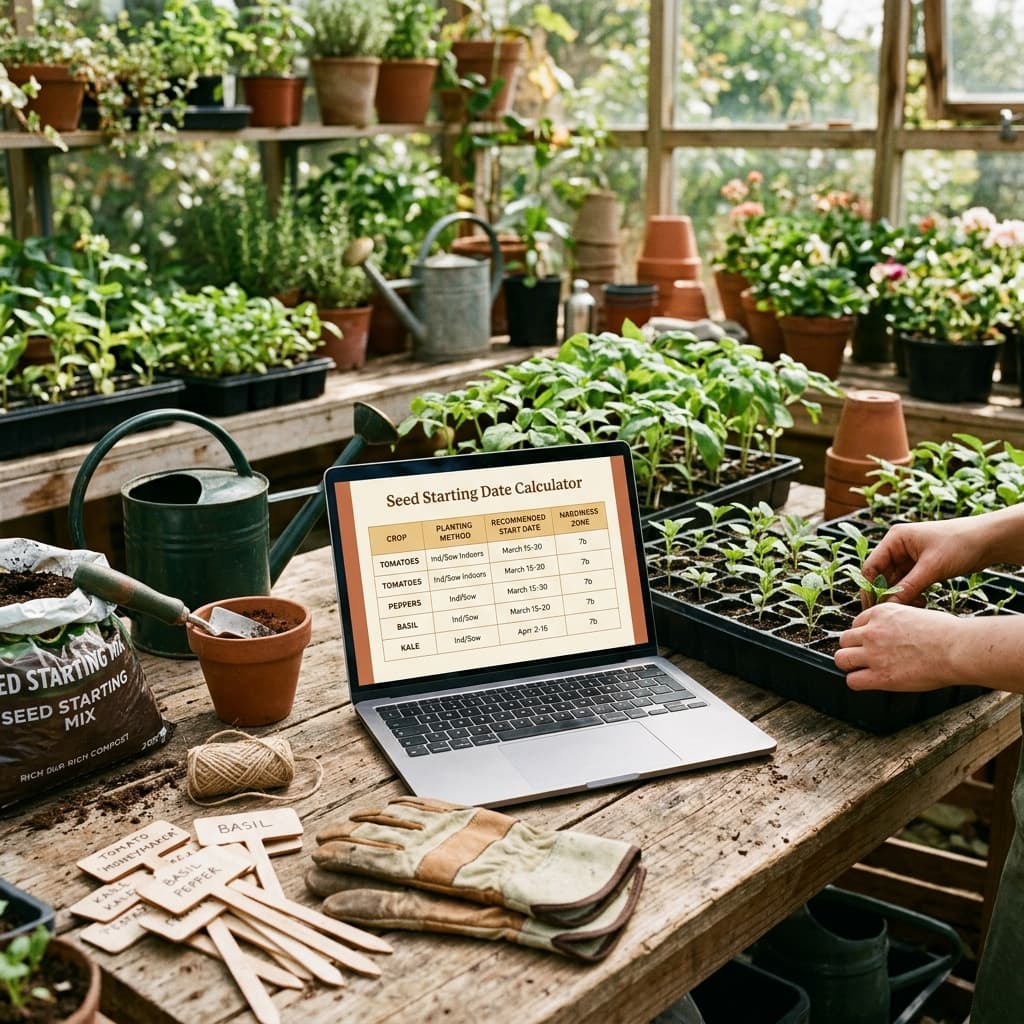
Seed Starting Date Calculator
Enter your last frost date and any vegetable or herb. The seed starting date calculator works backward from your transplant window to give the optimal indoor sowing date — accounting for the crop's required weeks of indoor growth before it is ready to go outside.
The most valuable output of the seed starting calculator is a complete planting calendar for your entire garden. Rather than trying to remember that tomatoes need 6–8 weeks while peppers need 8–10 and basil needs only 4–6, you enter your frost date once and get precise start dates for every variety. Print this calendar at the start of each growing season and refer to it as a commitment rather than a guideline.
Composting Science
Composting is a biological process governed by chemistry — specifically the carbon-to-nitrogen ratio of the materials you add. Microorganisms that decompose organic matter require both carbon (for energy) and nitrogen (for protein synthesis). When the C:N ratio is in the optimal range of approximately 25:1 to 35:1, decomposition is fast, efficient, and odor-free. Outside this range, the biology stalls.
The compost ratio calculator solves the most common composting problem: pile building by intuition. Most gardeners add what they have rather than what the biology requires. The result is often too carbon-heavy (too many dry leaves and wood chips) — the pile sits cold and unchanged for months — or too nitrogen-heavy (too many kitchen scraps and fresh lawn clippings) — the pile becomes anaerobic, smelly, and attracts pests.
The calculator lets you input each material you plan to add (by weight or volume), automatically looks up its C:N ratio, and computes the blended ratio of your mix. It then tells you whether to add more high-carbon browns or high-nitrogen greens to reach the optimal window. Using the calculator takes 5 minutes; it prevents months of failed composting and produces finished compost in as little as 3–4 weeks instead of 6–12 months.
Aquarium Planning
Aquariums and garden water features share a fundamental math problem: actual water volume is rarely what the box says. Tank manufacturers report nominal capacity measured to the brim — but your actual fill level accounts for substrate depth, decorations, rock structures, and the fact that you leave space at the top. These subtractions typically reduce effective volume by 10–20%.
The aquarium volume calculator accepts interior dimensions and actual fill height to compute true water volume in both gallons and liters. This precise number determines stocking capacity, filtration sizing, water change volume, and most critically — medication and chemical dosing. In a 50-gallon nominal tank that actually holds 42 gallons, dosing for 50 gallons delivers a 19% overdose of any treatment. For medications with narrow therapeutic windows, this is the difference between treatment and toxicity.
Garden Planning Numbers:
Optimal compost C:N
25:1–35:1
Tomato indoor weeks
6–8 wks
Min germination rate
60%+
Home Project Calculators
Beyond the garden, home improvement and maintenance projects involve the same kind of precise measurement calculations. Flooring, paint, mulch, topsoil, gravel, concrete — every material is sold in specific units, but most projects specify needs in different units. Converting between what you need and what you can buy requires accurate area and volume calculations.
- Mulch and topsoil: Garden beds require a specific depth of mulch or amended soil. Calculate the area of each bed (length × width), multiply by desired depth, and convert cubic feet to bags or cubic yards for purchasing. Adding 3 inches of mulch to a 200 square foot bed requires 50 cubic feet — approximately 25 two-cubic-foot bags.
- Paint coverage: Coverage rates vary by paint type and surface porosity, but standard interior paint covers approximately 350–400 square feet per gallon. Calculate wall area (perimeter × ceiling height, minus doors and windows) and divide by coverage rate. Round up to the next full gallon and buy primer separately.
- Container gardening: Knowing the volume of your planting containers allows you to calculate soil volume needed for filling and watering volume for irrigation calculations. Container volume calculators handle rectangular, cylindrical, and tapered pot shapes.
Garden Planning System
Step 1: Start with a Frost Date Calendar
Find your last and first frost dates for your location and enter them into the seed starting date calculator for every variety you plan to grow. Create a season-long planting schedule with exact indoor start dates and outdoor transplant windows.
Step 2: Test Your Seed Inventory
In late winter, germination-test all stored seeds before the growing season begins. Use the germination rate calculator to assess viability. Replace stock below 60% viability and adjust seeding density for 60–80% viable batches.
Step 3: Balance Your Compost Before Building
Before adding materials to a compost pile, enter planned quantities into the compost ratio calculator. Adjust the mix to hit the 25:1–35:1 target. This one step transforms slow cold composting into active thermophilic decomposition.
Step 4: Measure Before Every Material Purchase
For any garden or home project involving bulk materials — soil, mulch, gravel, concrete — calculate exact volume needed before purchasing. Use the aquarium volume calculator for water features and the area/volume calculators for beds and borders. Buy 10–15% extra for waste and settling.
FAQs
How do I find my last frost date?
My compost pile is not heating up. What is wrong?
Can I use the aquarium volume calculator for garden ponds?
Author Spotlight
The ToolsACE Team
ToolsACE is an independent platform founded in 2023 by a team of software developers and educators committed to making precision tools accessible to everyone, for free.