Fiber Intake Calculator: The Fibermaxxing Guide to 30g+ Per Day in 2026
The average adult gets 15g of fiber per day. The evidence-backed target is 30–38g. That gap has measurable health consequences — and it's fixable.


Fibermaxxing Explained
Fibermaxxing — the practice of deliberately optimizing daily dietary fiber intake — has moved from niche nutrition circles to mainstream health discourse. The evidence driving this is substantial: higher fiber intake is associated with reduced risk of colorectal cancer, cardiovascular disease, type 2 diabetes, and all-cause mortality. It improves gut microbiome diversity, reduces LDL cholesterol, stabilizes blood glucose, and increases satiety per calorie.
The average American consumes approximately 15–17g of fiber per day. Dietary guidelines recommend 25–38g. People living in traditional societies with diverse plant food diets often consume 50–100g per day. The gap between what most people eat and what evidence supports is one of the most consequential nutritional deficits in the modern diet.
Use our calorie calculator to determine your total daily intake, then use the 14g-per-1,000-calories formula to calculate your personalized fiber target.
"For every 10g increase in daily fiber intake, research shows a 10% reduction in all-cause mortality risk. It's one of the most replicated findings in nutrition epidemiology."
Daily Fiber Targets by Age and Sex
USDA Dietary Fiber Recommendations:
Men aged 19–50
38g per day
Women aged 19–50
25g per day
Men aged 51+
30g per day
Women aged 51+
21g per day
These are the minimum recommendations for health maintenance. Higher-fiber research diets targeting microbiome optimization often use 40–60g per day. Most people benefit from working toward the official recommendation first, then gradually increasing further if tolerated well.
An alternative formula used in clinical research: 14g of fiber per 1,000 calories of food consumed. For someone eating 2,000 calories, this equals 28g. For 2,500 calories, 35g. This formula auto-adjusts for total food intake — higher calorie needs naturally accommodate higher fiber intake through larger food volume.
Soluble vs Insoluble Fiber: Why Both Matter
Soluble Fiber
Dissolves in water, forming a gel in the digestive tract. Slows glucose absorption, lowers LDL cholesterol, and feeds beneficial gut bacteria (prebiotic effect). Found in oats, barley, apples, beans, psyllium. Target: 6–10g/day of total fiber intake.
Insoluble Fiber
Does not dissolve in water. Adds bulk to stool, accelerates gut transit time, and reduces constipation and colorectal cancer risk. Found in wheat bran, nuts, vegetables, whole grains. Target: remaining majority of daily fiber target.
Most whole plant foods contain a mix of both types. You don't need to track soluble vs insoluble separately — focus on total fiber from diverse whole food sources, and the ratio tends to work out naturally. Supplements like psyllium husk are predominantly soluble fiber and are most useful for LDL reduction and blood glucose management specifically.
Highest Fiber Sources: Density by Serving
- Legumes (highest density): Black beans (15g/cup cooked), lentils (16g/cup cooked), chickpeas (12g/cup cooked), split peas (16g/cup cooked). One cup of lentils provides 40–65% of daily target depending on sex.
- Whole grains: Oats (4g per half cup dry), barley (6g/cup cooked), bulgur wheat (8g/cup cooked), quinoa (5g/cup cooked). Replace refined grains to double fiber intake from grains.
- Vegetables (notable): Artichoke hearts (10g per medium artichoke), avocado (10g per avocado), edamame (8g/cup), peas (9g/cup cooked), broccoli (5g/cup cooked).
- Fruits (notable): Raspberries (8g/cup), pears (5.5g per medium pear), apple with skin (4.5g per medium apple), dried figs (7.5g per half cup).
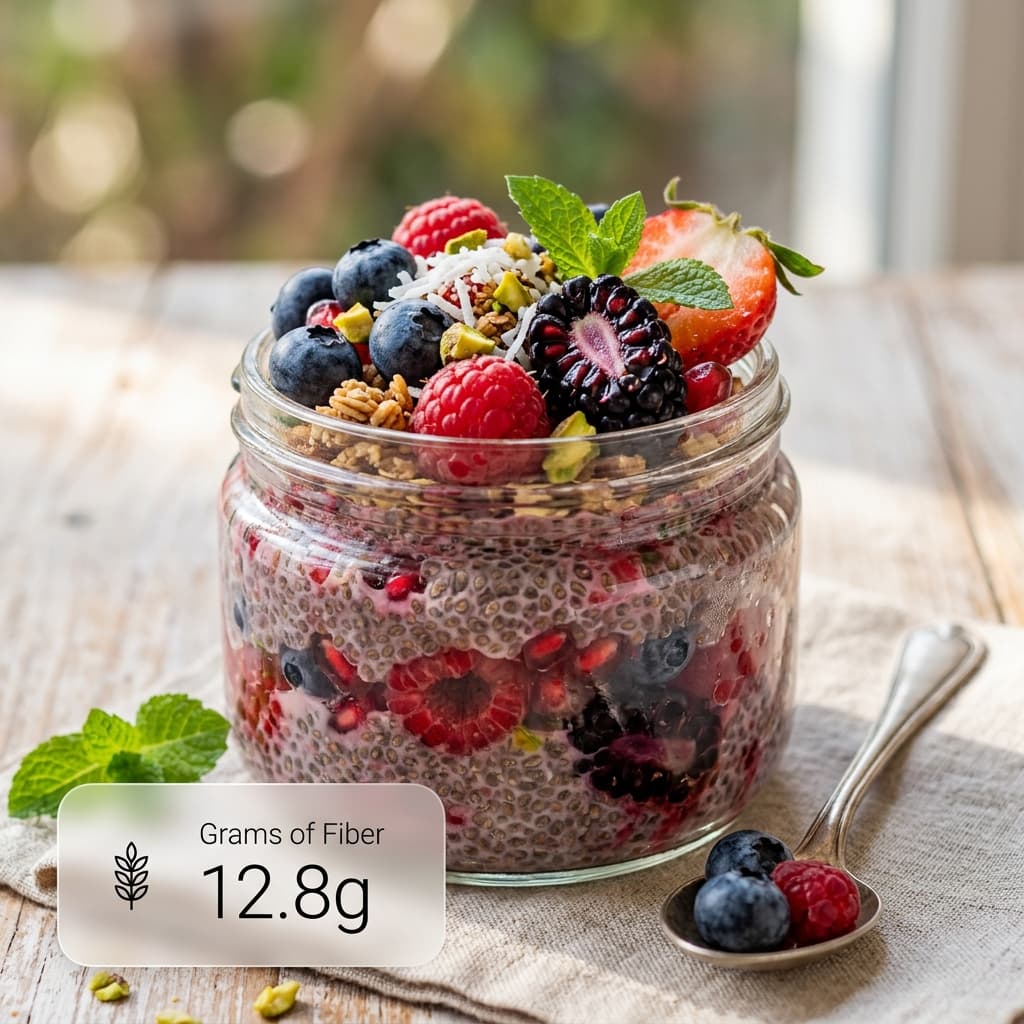
- Seeds: Chia seeds (10g per 2 tablespoons), flaxseeds (5.5g per 2 tablespoons). Both are easy additions to smoothies, yogurt, and oatmeal.
How to Track Your Fiber Intake
Step 1: Know Your Target
Use the fiber intake calculator to get your personalized daily target based on age, sex, and calorie intake. The default USDA targets (25–38g) are a solid starting point; optimize from there based on your health goals.
Step 2: Audit Your Current Intake
Log your food for 3–5 days to establish a baseline. Most people discover they're getting 12–18g/day — roughly half the target. Identify the highest-volume meals with the lowest fiber: these are the easiest upgrade opportunities.
Step 3: Increase Gradually
Jumping from 15g to 35g in one week causes significant digestive discomfort (bloating, gas, cramping) as gut microbiome adjusts. Increase by 5g per week. Give your microbiome 2–4 weeks to adapt at each level before increasing further.
Fiber FAQs
Can I get too much fiber?
Does cooking reduce fiber content?
Are fiber supplements as effective as food fiber?
Author Spotlight
The ToolsACE Team
ToolsACE is an independent platform committed to making evidence-based nutrition tools accessible to everyone — students, athletes, and anyone trying to make smarter food decisions.