GLP-1 & Calorie Deficit: The Numbers Behind the Weight Loss Revolution in 2026
Semaglutide and tirzepatide suppress appetite — but calories still count. Learn how to pair a calorie deficit calculator with GLP-1 therapy for maximum fat loss while preserving muscle.


The GLP-1 Revolution
By 2026, GLP-1 receptor agonists — semaglutide (Ozempic, Wegovy), tirzepatide (Mounjaro, Zepbound), and their generics — have become the most-prescribed weight loss medications in history. The mechanism is powerful: these drugs slow gastric emptying, reduce appetite signals, and shift the body's set point for hunger. People on GLP-1 medications often report eating 30–50% less food without actively trying.
But a common misconception has emerged: that GLP-1 medications eliminate the need to think about nutrition. They don't. GLP-1 drugs create the conditions for a calorie deficit — they don't guarantee one. The people getting the best results are those who understand the numbers, use them intentionally, and protect muscle mass while losing fat.
This guide explains the calorie deficit mathematics behind GLP-1 therapy, and how to use ToolsACE's calorie calculator and TDEE calculator to maximize fat loss outcomes.
"GLP-1 medications lower the difficulty of eating less. They do not change what happens inside cells when calorie intake drops below expenditure."
How GLP-1 Works: The Appetite Suppression Mechanism
GLP-1 (glucagon-like peptide-1) is a hormone naturally produced in the gut after eating. It signals the brain's satiety centers, slows digestion, and reduces the urge to eat. GLP-1 receptor agonist drugs mimic and extend this signal, keeping appetite suppressed for days at a time rather than the 30–90 minutes of a natural post-meal response.
The clinical effect is measurable: phase III trials for semaglutide showed an average calorie reduction of roughly 24% from baseline. Tirzepatide (which also agonizes GIP receptors) showed 20–25% calorie reductions. But "average" hides wide individual variation — some users see 40% appetite reduction; others see 10%.
TDEE Calculator
Know your maintenance calories before starting GLP-1. Use the TDEE calculator with your current activity level to set a baseline — that's your starting target.
BMI Calculator
Track your starting BMI and target range. The BMI calculator gives you the objective classification and healthy range for your height.
This is why tracking matters on GLP-1 therapy: the drug may be reducing your appetite by 15% or 40%. Without tracking, you don't know which — and you can't optimize accordingly. Users who log food on GLP-1 medications consistently lose more weight than those who rely on hunger signals alone.
Calorie Deficit Math on GLP-1
The basic thermodynamic principle doesn't change on GLP-1 medications. Fat loss requires a sustained calorie deficit. One pound of fat contains approximately 3,500 calories. A daily deficit of 500 calories produces roughly 1 lb of fat loss per week — this holds whether the deficit comes from drug-induced appetite suppression or deliberate dietary restriction.
GLP-1 + Calorie Math:
Average calorie reduction on semaglutide
~500–700 cal/day less eaten
Expected fat loss (no exercise change)
1–1.5 lbs per week
Where GLP-1 users need to be careful: eating too little. When the drug suppresses appetite aggressively, some users eat 800–1,000 calories per day — well below what's needed to preserve lean muscle. The calorie calculator will give you a floor: the minimum intake recommended for your stats and goal. Going below it consistently risks muscle loss, which lowers TDEE permanently and makes weight regain more likely after stopping the medication.
Use our BMI calculator monthly to track where you are relative to your target range. Pair it with the ideal weight calculator to set a realistic endpoint before you start — GLP-1 therapy has a well-documented plateau effect, and knowing your target prevents undershooting or overshooting.
Protein + GLP-1: Protecting What You've Built
The most common clinical complication of GLP-1-driven rapid weight loss is disproportionate muscle loss. Studies show that without deliberate protein intake and resistance exercise, roughly 25–40% of weight lost on GLP-1 medications comes from lean tissue — not fat. This is the same pattern seen in crash diets, and it leads to the same outcome: lower metabolic rate, reduced strength, and higher risk of weight regain.
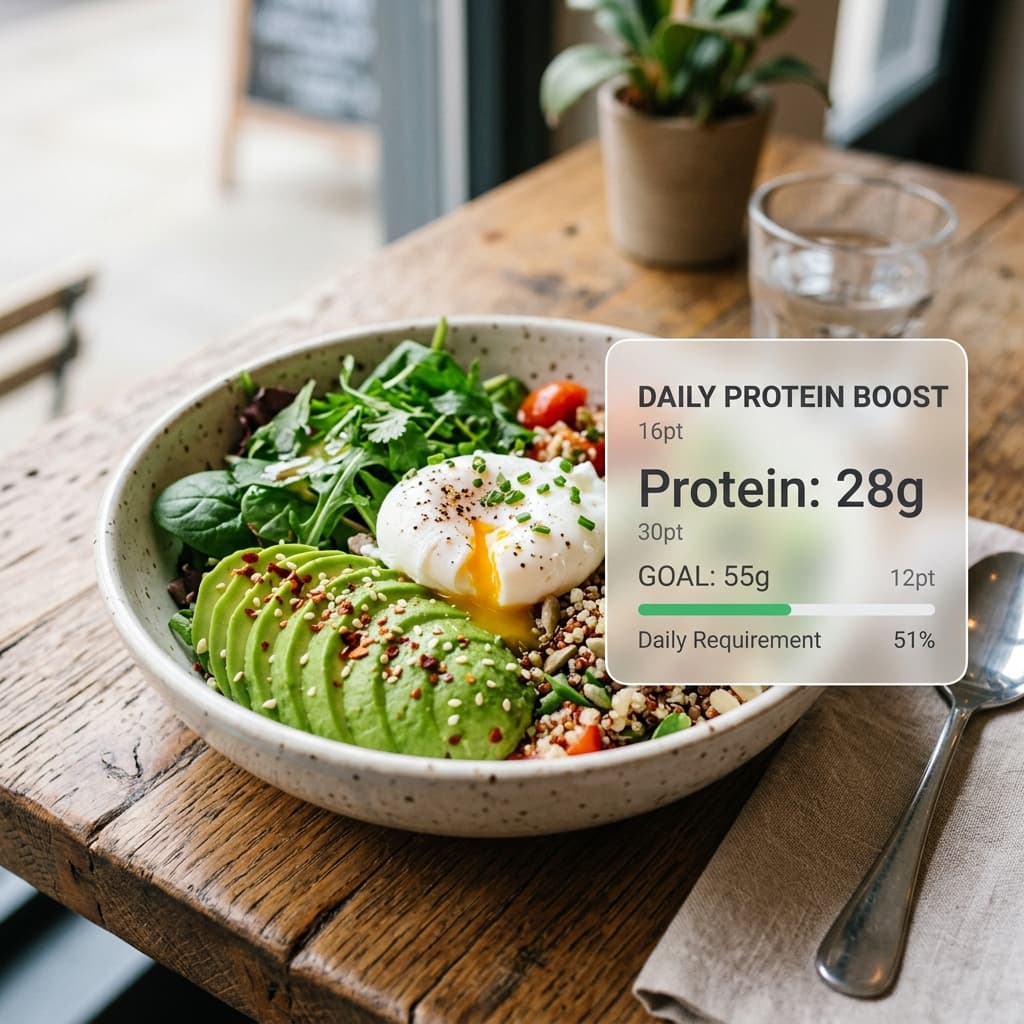
- Protein target: Most evidence supports 1.2–1.6g of protein per kilogram of body weight per day during active weight loss. Use our protein calculator to get your personalized target based on weight and goal.
- Distribute protein: Aim for 30–40g per meal rather than front-loading. GLP-1 medications slow gastric emptying — smaller, protein-rich meals are easier to consume and more satiating.
- Resistance training: The evidence for muscle preservation on GLP-1 points strongly toward resistance training 2–3x per week. Protein without training still helps, but the combination is significantly more effective.
Tracking Progress: The GLP-1 Measurement Stack
Week 1: Establish Your Baseline
Before your first dose, run the TDEE calculator, BMI calculator, and calorie calculator. Log your maintenance calories. This gives you a true before state — not just a weight, but a metabolic baseline.
Monthly: Body Composition Check
Weigh yourself weekly but focus monthly on body fat percentage. Use the body fat calculator with tape measurements. You want fat going down, lean mass holding steady. If both are dropping fast, increase protein and add resistance training.
At Plateau: Recalculate TDEE
GLP-1 plateaus happen when your body adjusts. When weight loss stalls, re-run the TDEE calculator at your new lower weight. Your calorie needs have dropped — your deficit target needs to adjust accordingly.
GLP-1 Calorie FAQs
Do I need to count calories on GLP-1 medications?
What calorie target should I set on GLP-1?
Why am I losing weight slowly even on GLP-1?
Author Spotlight
The ToolsACE Team
ToolsACE is an independent platform built by software developers and educators who believe accurate calculation tools should be free and accessible to everyone. Our health content is written by practitioners and researchers who use these tools themselves.