Ozempic Weight Loss Guide: Expected Results, Timeline, and the Real Numbers
GLP-1 receptor agonists produce real, clinically validated weight loss — but the average result from trials is not what most people see in social media testimonials. Here is what the data actually shows, and what you need to do to get the best outcome.


How GLP-1 Drugs Work
GLP-1 receptor agonists — semaglutide (Ozempic, Wegovy), tirzepatide (Mounjaro, Zepbound), liraglutide (Saxenda) — mimic glucagon-like peptide-1, a hormone naturally released after eating. Activating GLP-1 receptors does three things simultaneously:
- Slows gastric emptying: Food moves out of the stomach more slowly, extending the feeling of fullness for hours after a meal
- Acts on the hypothalamus: Reduces appetite signals in the brain's hunger centre, lowering the drive to eat independent of stomach fullness
- Increases insulin sensitivity: Improves glucose handling, which reduces insulin spikes and subsequent hunger crashes that drive overeating
The net effect: most people on therapeutic doses eat significantly less — not through willpower, but because appetite signals are pharmacologically reduced. The mechanism is hormonal, not motivational.
"GLP-1 drugs do not burn fat directly — they create a calorie deficit by reducing appetite. The weight loss still follows the same energy balance mathematics: calories in must be less than calories out."
Expected Weight Loss by Drug
Clinical trial data at maximum approved doses, measured at 68–72 weeks (approximately 16–18 months). These are average results from trials — individual outcomes vary significantly based on adherence, diet quality, exercise, and genetic response.
| Drug | Generic | Avg. % Body Weight Lost | Trial |
|---|---|---|---|
| Ozempic (2.0mg) | Semaglutide | ~9.6% | STEP 8 (diabetes) |
| Wegovy (2.4mg) | Semaglutide | ~14.9% | STEP 1 (obesity) |
| Mounjaro (15mg) | Tirzepatide | ~20.9% | SURMOUNT-1 |
| Zepbound (15mg) | Tirzepatide | ~20.2% | SURMOUNT-1 |
| Saxenda (3mg) | Liraglutide | ~5.0–8.0% | SCALE trial |
In absolute terms at a 15% loss: a 250 lb person loses ~37 lbs. A 200 lb person loses ~30 lbs. A 180 lb person loses ~27 lbs. Use our weight loss percentage calculator to calculate your projected result based on starting weight and expected percentage.
Calculating Your Expected Results
Clinical averages are a starting point. Your actual result depends on:
- Starting BMI: Higher starting BMI correlates with greater absolute weight loss (more to lose) but similar or slightly lower percentage loss
- Dose achieved: Most people titrate slowly over 16–20 weeks. Not everyone tolerates the maximum dose — those at lower doses lose less
- Diet quality: GLP-1s reduce appetite but do not override food choices. People who eat high-protein, minimally processed diets lose more weight and more fat specifically
- Exercise: Resistance training during GLP-1 treatment is critical for preserving muscle. Those who exercise regularly lose a higher proportion of fat vs. muscle
- Individual response: GLP-1 receptor density varies genetically — some people are "super-responders," others see minimal effect even at max dose
Check your current BMI relative to healthy range using our BMI calculator. Your target BMI range sets a realistic weight loss ceiling regardless of medication.
How GLP-1s Reduce Calorie Intake
Studies measuring food intake on GLP-1 therapy show average spontaneous calorie reduction of 400–800 kcal/day compared to baseline — without deliberate dietary restriction. This is the pharmacological calorie deficit driving the weight loss.
At 500 kcal/day deficit, the 3,500 kcal/lb rule projects 1 lb/week. At 750 kcal/day deficit: 1.5 lb/week. Clinical trials run 68–72 weeks — the weight loss is front-loaded in the first 36 weeks and slows thereafter as appetite suppression partially attenuates and body weight decreases TDEE.
Your TDEE also drops as you lose weight. A 250 lb person at maintenance burns significantly more than the same person at 210 lbs — meaning the calorie deficit narrows over time even with the same drug dose. Calculate your new TDEE periodically with our TDEE calculator to understand how the energy equation is shifting.
Muscle Loss Risk
This is the most underappreciated downside of GLP-1-driven weight loss. DEXA scan studies of GLP-1 trial participants show that 25–39% of total weight lost is lean mass (muscle + bone + water) — significantly higher than the 15–25% lean mass loss seen in comparable diet-only interventions with adequate protein.
The mechanism: GLP-1s reduce overall appetite including protein appetite. People on semaglutide often eat far less protein than needed for muscle preservation. Combined with the large calorie deficit and frequent reduced activity (fatigue is common), muscle loss is substantial.
The counter-strategy requires two inputs:
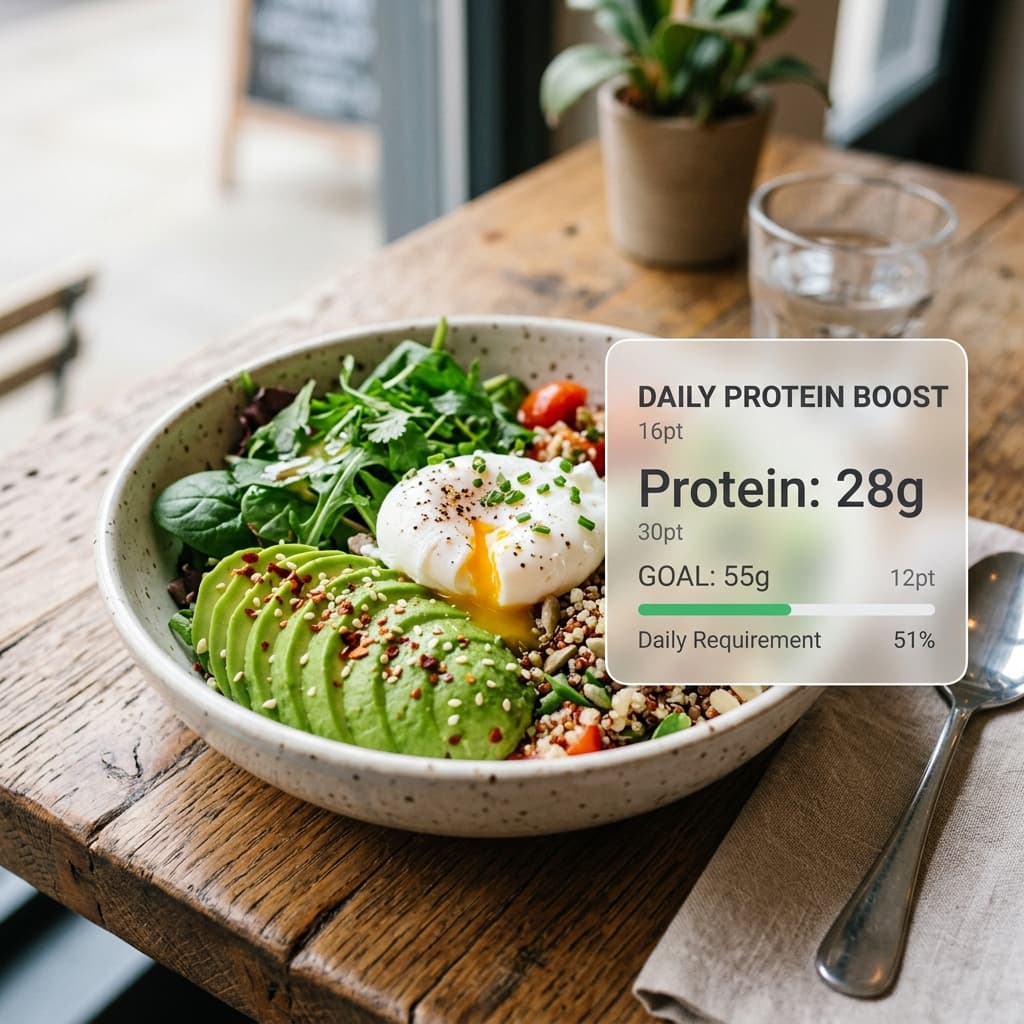
- High protein intake: Aim for 0.8–1.0g/lb bodyweight daily despite reduced appetite. Prioritise protein at every meal — eat it first before appetite is satisfied by other foods. Use our protein calculator for your daily target.
- Resistance training 3–4x/week: Progressive overload provides the anabolic stimulus needed to retain muscle even in a large deficit. This cannot be substituted with cardio alone.
People who combine GLP-1 therapy with high protein intake and resistance training retain significantly more lean mass and achieve better body composition outcomes than those using medication alone.
The GLP-1 Plateau
Most people on GLP-1 therapy experience a weight loss plateau between months 9 and 18. This is expected and has two primary causes:
- Reduced TDEE: As bodyweight falls, maintenance calories drop. The same drug dose creates a smaller absolute calorie deficit on a lighter body.
- Partial appetite adaptation: Appetite suppression attenuates slightly over time as the body adapts to persistent GLP-1 receptor activation. Calorie intake slowly creeps upward toward a new equilibrium.
Options at plateau: accept current weight as the drug's ceiling, reduce calorie intake further with intentional dietary effort, increase exercise volume, or (with physician guidance) switch to a more potent agent or consider dose escalation if not at maximum.
What Happens When You Stop
The STEP 4 trial provides the clearest answer: participants who stopped semaglutide after 20 weeks regained an average of two-thirds of their lost weight within one year. At 2 years post-cessation, most had returned to near baseline weight.
This is not a willpower failure. Obesity is a chronic disease with a strong hormonal component. When GLP-1 receptor agonism ceases, appetite returns to pre-treatment levels and weight rebounds accordingly. For most people, GLP-1 therapy is a long-term or permanent commitment — not a course of treatment like an antibiotic.
Those who maintain weight loss after stopping tend to have made significant lifestyle changes (diet habits, activity level) during treatment and built enough muscle mass to maintain a higher resting metabolic rate.
GLP-1 Weight Loss FAQs
How fast do you lose weight on Ozempic?
Does Ozempic work without diet and exercise changes?
Is Mounjaro (tirzepatide) better than Ozempic for weight loss?
Can you use a GLP-1 calculator to predict your result?
Will I lose muscle on Ozempic?
Author Spotlight
The ToolsACE Team
ToolsACE is an independent platform founded in 2023 by a team of software developers and educators. We build free, privacy-first tools and write guides to help people make better decisions — without sign-ups, paywalls, or data tracking.