Pet Dental Cost Calculator: How to Budget for Dog and Cat Dental Care in 2026
A routine cleaning costs $500–1,500. An unexpected extraction adds $500–2,000 more. Understand the numbers, budget accordingly, and reduce costs through prevention.

Why Pet Dental Costs Spike
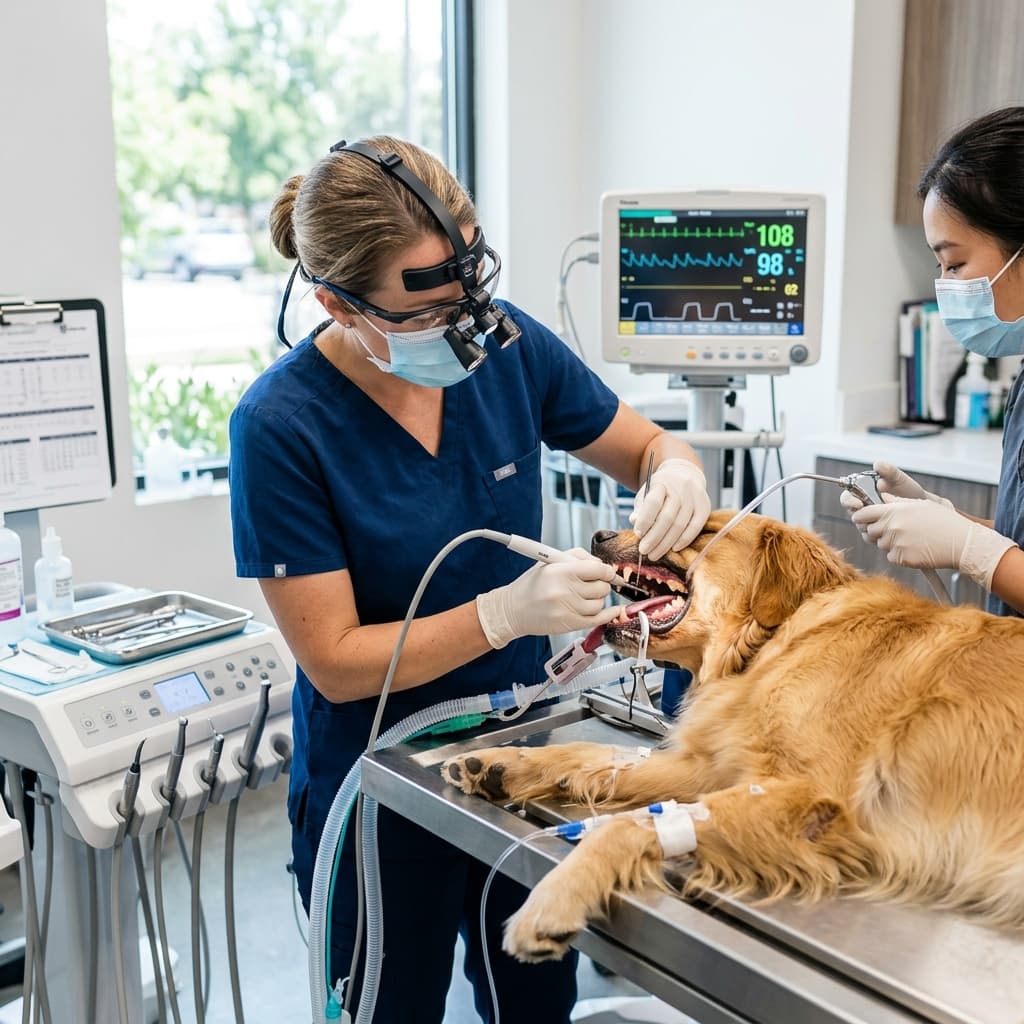
An estimated 80% of dogs and 70% of cats show signs of dental disease by age 3. Unlike human dentistry, veterinary dental procedures require general anesthesia — the single largest cost driver. The anesthesia alone accounts for $200–600 of a typical dental cleaning bill, before any scaling, polishing, X-rays, or extractions begin.
Most pet dental bills surprise owners not because the base cleaning is expensive, but because pre-anesthetic bloodwork ($80–150), dental radiographs ($150–250), and unexpected extractions ($100–400 per tooth) are added on the day of the procedure — after the pet is already under. The disclosed estimate becomes the floor, not the ceiling.
Understanding these cost components before your appointment, and using tools like our cost of owning a dog calculator or budget planner, allows you to budget accurately, ask the right questions, and make informed decisions about timing and treatment scope.
"Pet dental disease is progressive. A $600 cleaning at age 3 prevents the $3,000–5,000 multi-extraction procedure at age 8. The prevention ROI is clear."
Average Pet Dental Costs in 2026
2026 Veterinary Dental Cost Ranges:
Routine dental cleaning (dog)
$500–1,500
Routine dental cleaning (cat)
$400–1,200
Simple tooth extraction
$100–400 per tooth
Surgical extraction (complex)
$400–800 per tooth
Geographic variation is significant. Urban markets (New York, San Francisco, Seattle) typically run 50–80% higher than national averages. Specialty or emergency veterinary dental clinics run 2–3× the cost of general practice. University veterinary teaching hospitals often offer dental services at 30–50% below market rate — worth investigating if one is in your region.
Cost of Owning a Dog Calculator
Plan total lifetime pet costs including dental care. The cost of owning a dog calculator breaks down all expense categories so you know what to budget annually.
Dog Life Expectancy Calculator
Plan dental care across your pet's lifespan. The dog life expectancy calculator helps you project how many professional cleaning cycles to budget for over your dog's lifetime.
Prevention Math: The Financial Case for Brushing
The financial return on daily toothbrushing for dogs and cats is one of the most compelling in pet care. Pets with regular dental home care (brushing 3–7 times per week) require professional cleanings 2–3× less frequently than pets with no home care — translating to a cost reduction of $500–1,000+ per decade of a dog's life.
- Daily brushing (most effective): Reduces plaque accumulation by 70% compared to no brushing. Requires veterinary-approved enzymatic pet toothpaste (human toothpaste is toxic to pets). Plaque that isn't brushed off within 24–36 hours mineralizes into calculus (tartar), which requires professional scaling to remove.
- Dental chews (VOHC-accepted): The Veterinary Oral Health Council certifies chews proven to reduce plaque by at least 10%. Effective as a supplement to brushing. Not a replacement — they don't clean below the gumline where periodontal disease starts.
- Water additives: Antimicrobial water additives (xylitol-free) reduce oral bacteria. Modest effect, but effectively zero owner labor. Useful for pets that resist brushing.

Pet Insurance vs Out-of-Pocket: The Dental Math
Most Pet Insurance Excludes Routine Cleanings
Standard accident-and-illness pet insurance policies do not cover routine dental cleanings — only dental illness (fractures, infections, tooth resorption) or dental accidents. To cover cleanings, you need a wellness rider, which typically adds $15–40/month to your premium.
Wellness Rider Math: Worth It?
A $30/month wellness rider = $360/year = $1,800 over 5 years. If cleanings cost $700 every 2 years = $1,750 over 5 years, the rider roughly breaks even before considering any illness coverage. For small breeds with high dental disease rates (Yorkies, Chihuahuas, Dachshunds), the rider clearly wins.
Self-Insurance: The Pet Emergency Fund
Setting aside $50/month into a dedicated pet emergency savings account builds $600/year, $3,000 over 5 years. For single-pet households with healthy mixed-breed dogs or cats at low dental risk, self-insurance often beats the actuarial math of insurance premiums. For breeds with high dental disease rates, insurance is typically better value.
Breed Risk Factors: Who Pays More
Breed-specific dental anatomy directly impacts lifetime dental costs. Small and brachycephalic (flat-faced) breeds are disproportionately affected:
- High-risk dog breeds: Yorkshire Terriers, Chihuahuas, Dachshunds, Maltese, Pugs, French Bulldogs, Boxers. Overcrowded teeth from small jaws accelerate plaque buildup and periodontal disease. Many require dental cleanings every 6–12 months rather than the standard 1–2 years.
- High-risk cat breeds: Persians, Himalayans, Exotic Shorthairs, Siamese. Tooth resorption (feline odontoclastic resorptive lesions) affects up to 60% of cats — Siamese are particularly susceptible. Each affected tooth typically requires extraction.
- Lower-risk breeds: Larger dogs generally maintain better dental spacing. Labrador Retrievers, German Shepherds, and Golden Retrievers have lower rates of severe periodontal disease than small breeds, though they still require regular care.
Pet Dental FAQs
How often does my dog or cat need a dental cleaning?
Is anesthesia-free dental cleaning safe and effective?
What questions should I ask before my pet's dental procedure?
Author Spotlight
The ToolsACE Team
ToolsACE builds free pet care calculators grounded in veterinary reference data. Our pet health content is written for responsible pet owners who want accurate information without requiring a vet visit for every question.