Protein Target Calculator: How Much Protein You Actually Need in 2026
The RDA of 0.8g/kg was designed to prevent deficiency, not build muscle or preserve lean mass during fat loss. Here's your real target.


Why Protein Targets Matter
The official dietary reference intake for protein — 0.8g per kilogram of body weight — is a minimum to prevent deficiency in sedentary adults. It was never designed as a target for people trying to build muscle, lose fat, age well, or maintain metabolic health through active living. For those goals, the research consistently points to significantly higher intakes.
Protein serves three critical functions beyond basic nutrition: it provides the amino acid building blocks for muscle protein synthesis, it is the most satiating macronutrient per calorie (reducing total calorie intake naturally), and it has the highest thermic effect of food (25–30% of protein calories are burned during digestion). Getting protein right is one of the highest-leverage nutritional decisions you can make.
Use our protein intake calculator to get your personalized daily target based on your weight, activity level, and goal — whether that's fat loss, muscle gain, or healthy aging.
"The 0.8g/kg RDA prevents muscle wasting. Optimal protein for active adults ranges from 1.6–2.2g/kg — more than double the minimum."
Daily Protein Targets by Goal
Evidence-based protein recommendations vary by goal. The International Society of Sports Nutrition, which synthesizes research across populations, provides the clearest targets:
Protein Targets by Goal:
Fat loss (preserving muscle)
1.6–2.4g per kg body weight
Muscle gain
1.6–2.2g per kg body weight
Active maintenance
1.2–1.6g per kg body weight
Healthy aging (50+)
1.2–2.0g per kg body weight
For obese individuals, protein targets are often calculated based on ideal body weight rather than current weight, to avoid overestimating the target. Our protein intake calculator handles this automatically — enter your current weight, height, and goal, and it calculates the right target for your body.
Body Weight Formula: Lean Mass vs Total Weight
The simplest protein formula multiplies total body weight (in kg) by a target ratio. This works well for most people in a healthy BMI range. But for individuals with high body fat percentage, this approach overestimates protein needs — muscle tissue requires protein, not fat tissue.
- Standard approach: Total body weight in kg × 1.6–2.2g = daily protein target. Simple, works for most active people at healthy weight.
- Lean mass approach: Estimate lean mass using the body fat calculator (or DEXA), then multiply lean mass × 2.0–2.8g. More accurate for individuals with body fat above 30%.
- Practical check: If your calculated target feels extremely high (over 200g/day for someone under 90kg), you may be using total weight at a high body fat percentage — switch to the lean mass method.
Protein Intake Calculator
Get your personalized daily target. The protein calculator accounts for your weight, activity level, and goal to give you an accurate daily gram target.
Body Fat Calculator
Know your lean mass for more accurate protein targets. The body fat calculator uses tape measurements to estimate lean mass in minutes.
Timing & Distribution: How to Hit Your Target
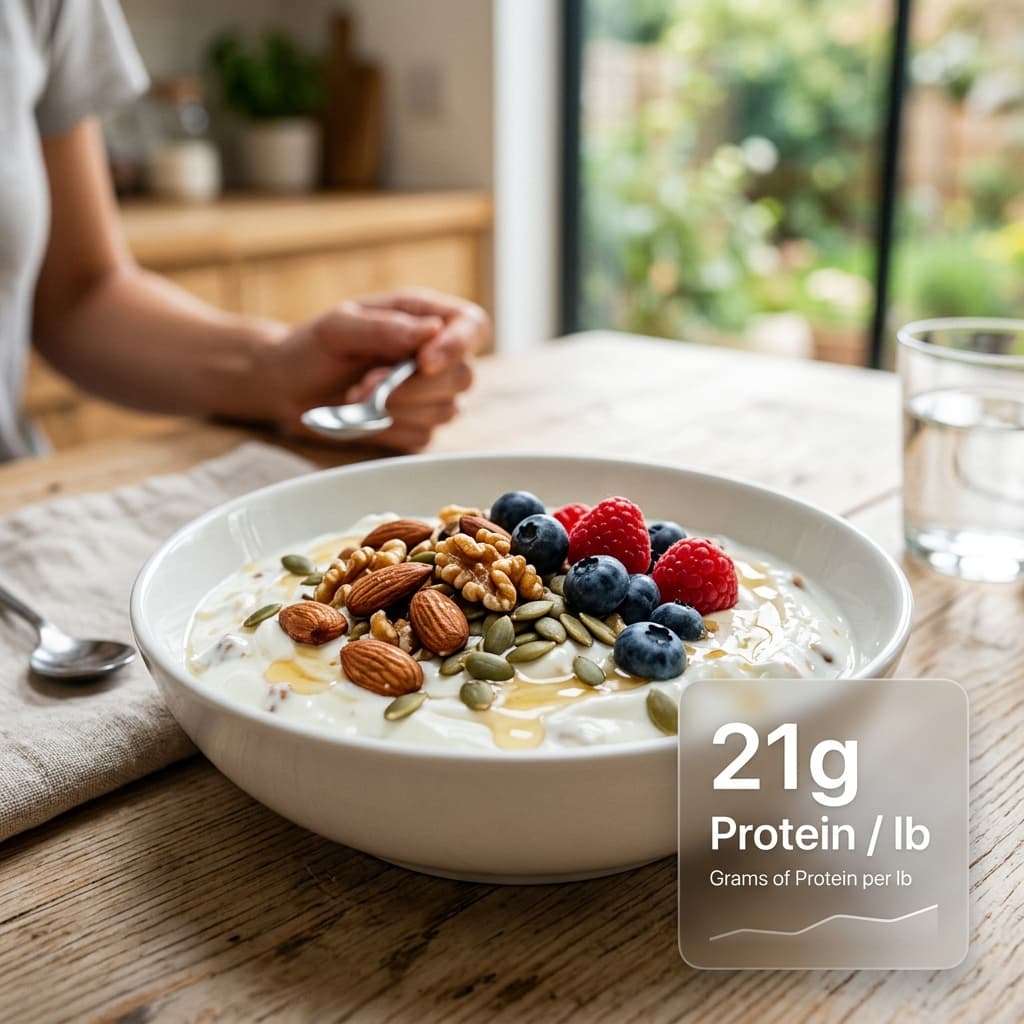
Total daily protein is the primary driver of muscle protein synthesis. Timing matters, but less than most people believe — the research shows that distributing protein across 3–5 meals per day (rather than one or two large servings) optimizes anabolic response. The target per meal for maximal muscle protein synthesis is approximately 30–40g of protein.
Per-Meal Minimum: 30–40g
Each meal should contain at least 30g of protein to maximally stimulate muscle protein synthesis. This equates to roughly 4–5 oz of chicken, 5–6 oz of salmon, 1.5 cups of Greek yogurt, or 2 scoops of protein powder plus a meal.
Pre-Sleep Protein: 30–40g Casein
Protein synthesis occurs overnight. A pre-sleep protein serving (ideally slow-digesting casein from cottage cheese or casein protein powder) supports overnight muscle repair. Studies show this improves body composition outcomes without affecting fat loss.
Post-Workout: Within 2 Hours
The post-workout anabolic window is real but forgiving — within 2 hours of training, not immediately after. Focus on hitting your daily total before obsessing over post-workout timing.
Best Protein Sources: Density by Calorie
Not all protein sources are equal in terms of amino acid completeness, digestibility, and caloric cost. For fat loss phases where calories are limited, protein density (grams of protein per 100 calories) matters as much as total protein content.
- Highest density (animal): Egg whites (25g/100 cal), white fish like cod or tilapia (20g/100 cal), chicken breast (19g/100 cal), low-fat cottage cheese (15g/100 cal).
- High density (plant): Tofu (10g/100 cal), edamame (9g/100 cal), lentils (8g/100 cal). Note: plant proteins typically have lower leucine content and digestibility, requiring 15–25% higher intake to achieve equivalent anabolic effect.
- Supplements: Whey protein isolate (25g per 110 cal serving) is the most efficient protein source by density and absorption. Useful for hitting targets when whole food volume is impractical, not as a replacement for it.
Protein FAQs
Is high protein intake safe for kidneys?
Can I get enough protein on a plant-based diet?
What happens if I eat more protein than my target?
Author Spotlight
The ToolsACE Team
ToolsACE is an independent platform built by developers and educators. Our nutrition content is based on peer-reviewed research and written for people who want actionable numbers, not vague advice.