Sleep Quality Calculator: How to Optimize Your Sleep Cycles for Peak Performance in 2026
Sleep duration is only part of the equation. Understand REM cycles, find your chronotype, and calculate your way to better recovery and performance.

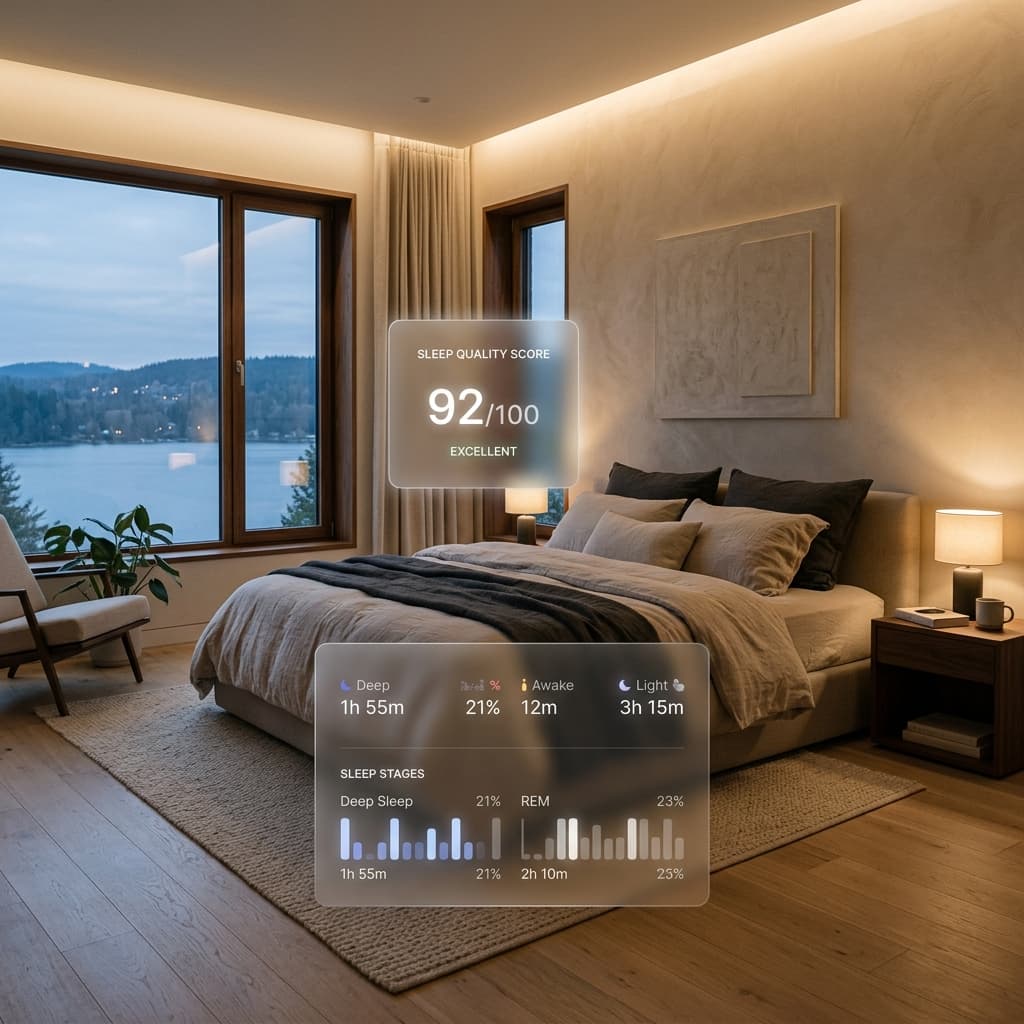
Why Sleep Scores Matter
Eight hours in bed and eight hours of quality sleep are not the same thing. Sleep quality encompasses how efficiently you cycle through sleep stages, how many times you wake, how long it takes to fall asleep, and whether you're sleeping at a time that aligns with your biological chronotype. Two people sleeping the same number of hours can have profoundly different recovery outcomes based on these factors.
The rise of consumer sleep trackers has made sleep data more accessible than ever. But the metrics these devices report — sleep score, REM percentage, deep sleep duration — are only useful if you understand what they mean and how to act on them. This guide explains the sleep mathematics that matter and how our sleep calculator helps you find the optimal window for your schedule.
"The question isn't how much time you spend in bed. It's how many complete 90-minute sleep cycles you complete — and whether you wake at the right moment in the cycle."
Sleep Cycles & Timing: The 90-Minute Rule
Sleep is not a single uniform state — it's a repeating cycle of four stages: three NREM stages (N1 light sleep, N2 intermediate sleep, N3 deep slow-wave sleep) and one REM stage. Each complete cycle takes approximately 90 minutes, and a typical night includes 4–6 complete cycles.
Optimal Sleep Window Targets:
Minimum recovery (4 cycles)
6 hours + 15 min to fall asleep
Optimal (5 cycles)
7.5 hours + 15 min to fall asleep
The key insight: waking at the end of a 90-minute cycle (in the light N1/N2 stage) leaves you feeling significantly more refreshed than waking in the middle of deep N3 or REM sleep. Our sleep calculator works backwards from your required wake time to suggest ideal bedtimes that complete full 90-minute cycles — rather than just tracking total sleep duration.
Sleep Calculator
Enter your wake time, and the sleep calculator gives you optimal bedtimes based on 90-minute cycle completion — so you wake refreshed, not mid-cycle.
Age-Based Sleep Needs
Sleep needs change with age — adults 18–64 need 7–9 hours; adults 65+ need 7–8. Children and teenagers need significantly more. The sleep calculator accounts for age in its recommendations.
Chronotype: Your Biological Sleep Window
Chronotype describes your genetically determined sleep-wake preference — whether you naturally function better as an early riser (lark), a night owl, or somewhere in between. It's not a lifestyle choice or a discipline problem: it's driven by the PER3 gene and other circadian clock genes.
- Morning types (larks): Peak cognitive performance in the late morning. Natural sleep window roughly 10pm–6am. Make up about 25% of the population.
- Evening types (owls): Peak cognitive performance in the evening. Natural sleep window roughly 1am–9am. Make up about 25% of the population. Forced early schedules create chronic circadian misalignment.
- Intermediate types: The majority (50%) fall between these extremes, with natural sleep windows around 11:30pm–7:30am. Most standard work schedules align reasonably well with this group.
Understanding your chronotype doesn't mean you can always sleep on your natural schedule — work and school impose external constraints. But knowing your type helps you optimize what you can control: prioritizing earlier wake times when possible for owls means earlier bedtimes, not just setting an alarm.
Sleep Debt: Why You Can't Catch Up on Weekends
Sleep debt is the cumulative deficit between the sleep you need and the sleep you get. Research from the University of Pennsylvania shows that cognitive impairment from sustained mild sleep deprivation (6 hours/night for two weeks) reaches the level of two full nights of no sleep — but subjects report feeling only slightly sleepy, unaware of how impaired they are.
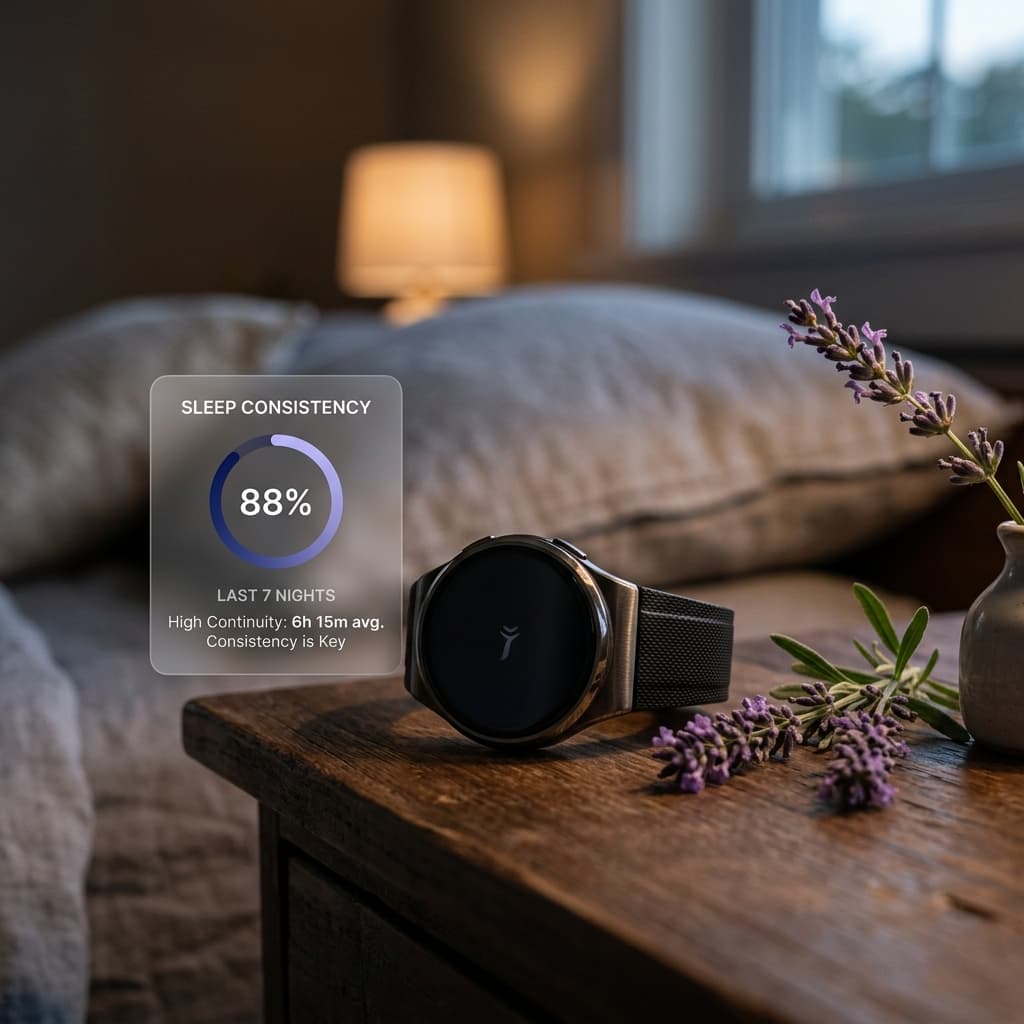
Weekend "recovery sleep" partially but not fully addresses sleep debt. A 2019 study showed that two recovery nights after 5 days of restricted sleep (6 hours/night) did not fully restore metabolic and cognitive function to baseline. The evidence points firmly toward consistent adequate sleep, not reactive recovery.
Improving Sleep Quality: Evidence-Based Steps
Fixed Wake Time: The Single Most Important Habit
A consistent wake time — same time every day including weekends — anchors your circadian rhythm. It matters more than bedtime. A fixed wake time establishes your sleep pressure, making it easier to fall asleep at a consistent hour.
Temperature: Cool Down to Fall Asleep
Core body temperature must drop 1–3°F to initiate sleep. A bedroom temperature of 65–68°F (18–20°C) is optimal for most adults. A warm shower 1–2 hours before bed paradoxically helps — it triggers vasodilation that accelerates core temperature drop.
Light Exposure: Morning Bright, Evening Dim
Morning bright light exposure (ideally sunlight within 30–60 minutes of waking) sets your circadian clock and advances melatonin release to the appropriate evening timing. Blue light restriction in the 2 hours before bed preserves natural melatonin onset.
Sleep FAQs
Is 6 hours of sleep enough?
Does the 90-minute sleep cycle rule always work?
How long does it take to recover from chronic sleep debt?
Author Spotlight
The ToolsACE Team
ToolsACE is an independent platform committed to making science-based wellness tools free and accessible. Our sleep content is grounded in peer-reviewed research from sleep science and circadian biology.