Visceral Fat Calculator: The Hidden Health Risk Behind Your Waistline in 2026
Visceral fat surrounds your organs and drives metabolic disease — yet most people have no idea how much they carry. Learn how to calculate and reduce it.


The Hidden Fat
You can't see visceral fat. You can't pinch it. It sits deep inside the abdominal cavity, wrapped around the liver, pancreas, and intestines — and it behaves more like an active endocrine organ than passive stored energy. It secretes inflammatory cytokines, disrupts insulin signaling, and raises cardiovascular risk in ways that subcutaneous fat (the fat under the skin you can grab) simply does not.
Two people can share the same BMI and total body weight, with one carrying minimal visceral fat and excellent metabolic health, while the other carries dangerous levels of organ-surrounding fat driving prediabetes, hypertension, and chronic inflammation. The scale cannot tell them apart. BMI cannot tell them apart.
Waist circumference and the waist-to-height ratio calculator are the most accessible proxies for visceral fat burden. This guide explains what the numbers mean and how to use them alongside our body fat calculator for a complete metabolic picture.
"Normal BMI does not rule out high visceral fat. A person can be 'metabolically obese at normal weight' — lean by BMI standards but carrying dangerous levels of abdominal organ fat."
Visceral vs Subcutaneous Fat: Why It Matters
Not all fat is metabolically equal. The distinction between subcutaneous fat and visceral fat is one of the most clinically significant in preventive medicine.
Subcutaneous Fat
Sits under the skin. Metabolically relatively inert. Provides insulation and energy reserves. High amounts correlate with obesity but are less directly linked to metabolic disease than visceral fat.
Visceral Fat
Surrounds abdominal organs. Metabolically active. Releases inflammatory molecules and free fatty acids directly into the portal circulation. Strongly linked to type 2 diabetes, cardiovascular disease, and non-alcoholic fatty liver disease.
Visceral fat is also the fat that responds most rapidly to lifestyle intervention. Aerobic exercise and calorie restriction both preferentially reduce visceral fat before subcutaneous fat — which means the waist measurement shrinks before the scale changes dramatically. This is one reason tracking waist circumference alongside weight gives a more accurate picture of metabolic progress.
How to Measure Visceral Fat Without a DEXA Scan
Gold-standard visceral fat measurement uses CT or MRI imaging, or DEXA scanning. These aren't available to most people outside clinical settings. The best accessible proxies are waist circumference and waist-to-height ratio.
- Waist circumference: Measure at the narrowest point between your bottom rib and hip bone, after exhaling normally. WHO risk thresholds: >94cm (37 in) for men, >80cm (31.5 in) for women indicates increased risk; >102cm (40 in) / >88cm (34.6 in) indicates high risk.
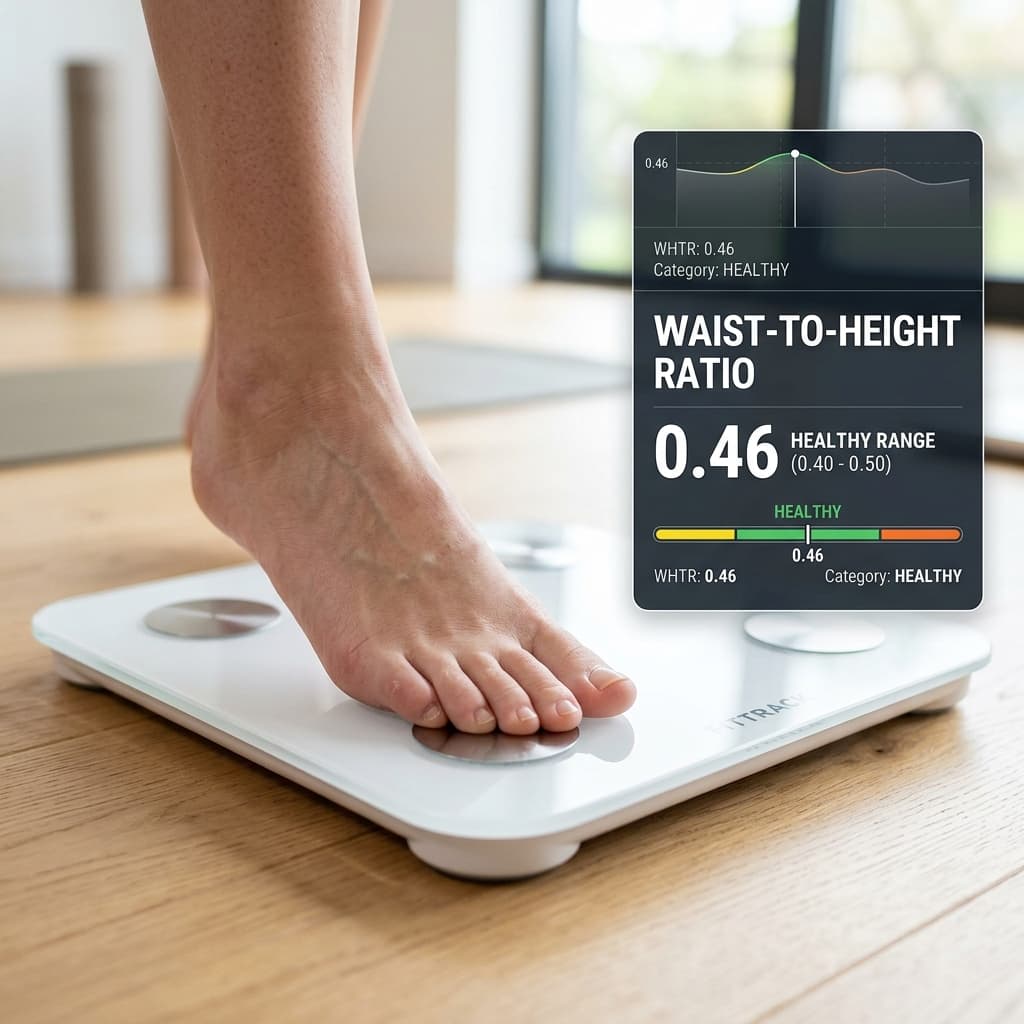
- Waist-to-height ratio (WHtR): Divide waist circumference by height, both in the same unit. A WHtR above 0.5 indicates elevated visceral fat risk. Above 0.6 indicates high risk. The target is simply: keep your waist less than half your height.
- Body fat calculator: Our body fat calculator uses waist, neck, and hip measurements to estimate total body fat percentage — and elevated body fat percentage combined with high waist circumference is a strong signal of significant visceral fat burden.
Risk Level Thresholds: What the Numbers Mean
Waist-to-Height Ratio Risk Levels:
Healthy range
Below 0.5 WHtR
Elevated risk
0.5 – 0.6 WHtR
High risk
Above 0.6 WHtR
The waist-to-height ratio outperforms BMI as a predictor of cardiometabolic risk in multiple large population studies. A 2020 meta-analysis of 300,000 participants found WHtR had a stronger association with cardiovascular events and diabetes than either BMI or waist circumference alone.
Check your waist-to-height ratio using our WHtR calculator. The result takes 30 seconds and gives you a clinically meaningful health signal that your BMI alone cannot provide.
Reducing Visceral Fat: What the Evidence Shows
Aerobic Exercise: The Fastest Reducer
Visceral fat responds to aerobic exercise faster than any other lifestyle intervention. Studies consistently show 150–300 minutes of moderate aerobic exercise per week reduces visceral fat by 5–10% over 12 weeks, even without dietary changes. Running, cycling, swimming, and brisk walking all qualify.
Calorie Deficit: The Necessary Foundation
You cannot spot-reduce visceral fat. It requires a whole-body calorie deficit. Use the TDEE calculator to find your maintenance level and target a modest 400–600 calorie daily deficit. Visceral fat releases preferentially during calorie restriction — waist measurements will drop before visible subcutaneous fat changes.
Sleep and Stress: The Overlooked Drivers
Cortisol (the stress hormone) drives visceral fat accumulation. Chronic sleep deprivation (under 6 hours) and chronic psychological stress both elevate cortisol. Addressing sleep quality and stress management can reduce visceral fat even without dietary changes — but works synergistically with diet and exercise.
Visceral Fat FAQs
Can you have high visceral fat at a normal BMI?
How quickly can visceral fat be reduced?
Is the body fat calculator accurate for visceral fat?
Author Spotlight
The ToolsACE Team
ToolsACE is an independent platform built by software developers and educators who believe accurate calculation tools should be free and accessible to everyone.