Waist-to-Height Ratio: The Single Best Health Number You Can Calculate in 2026
WHtR outperforms BMI in predicting cardiovascular disease and all-cause mortality. The calculation takes 30 seconds. Here's what your number means.


Better Than BMI?
BMI has dominated health screening for decades — but it has a fundamental flaw. It measures weight relative to height, ignoring where fat is distributed on the body. Two people at identical BMI values can have wildly different health profiles depending on whether their fat is subcutaneous (low risk) or visceral and abdominal (high risk).
The waist-to-height ratio (WHtR) fixes this. By comparing waist circumference directly to height, WHtR captures central adiposity — the abdominal fat distribution that research consistently links to cardiovascular disease, insulin resistance, hypertension, and all-cause mortality. A 2020 meta-analysis covering over 300,000 participants found WHtR outperformed BMI and waist circumference alone in predicting cardiometabolic risk across diverse ethnic populations.
Calculate yours now using the waist-to-height ratio calculator. You need two measurements and 30 seconds.
"Keep your waist less than half your height. This single rule of thumb identifies central obesity risk across age, sex, and ethnicity better than BMI alone."
The WHtR Formula
The calculation is straightforward: divide waist circumference by height. Both measurements must be in the same unit (centimeters or inches). The result is a dimensionless ratio between 0 and 1.
WHtR Formula:
WHtR = Waist ÷ Height
Example: 80cm waist ÷ 170cm height = 0.47 (healthy range)
Example: 95cm waist ÷ 170cm height = 0.56 (elevated risk)
The target is simple: keep your WHtR below 0.5. This means keeping your waist circumference below half your height. A person who is 170cm tall should aim for a waist circumference below 85cm (33.5 inches). A person who is 178cm tall should aim for below 89cm (35 inches).
This ratio scales naturally with height — which is exactly why it outperforms raw waist circumference as a health metric. A 95cm waist is very different on a 155cm person versus a 190cm person; WHtR captures that distinction automatically.
Risk Thresholds: What Your Number Means
- Below 0.4: Underweight range. May indicate insufficient fat stores. Common in lean endurance athletes or those with low muscle mass.
- 0.4 – 0.49: Healthy range. Low cardiometabolic risk. Maintain current habits.
- 0.5 – 0.59: Elevated risk. Increased risk of type 2 diabetes, hypertension, and cardiovascular events. Intervention recommended.
- 0.6+: High risk. Substantially elevated cardiometabolic risk. Medical consultation recommended alongside lifestyle intervention.
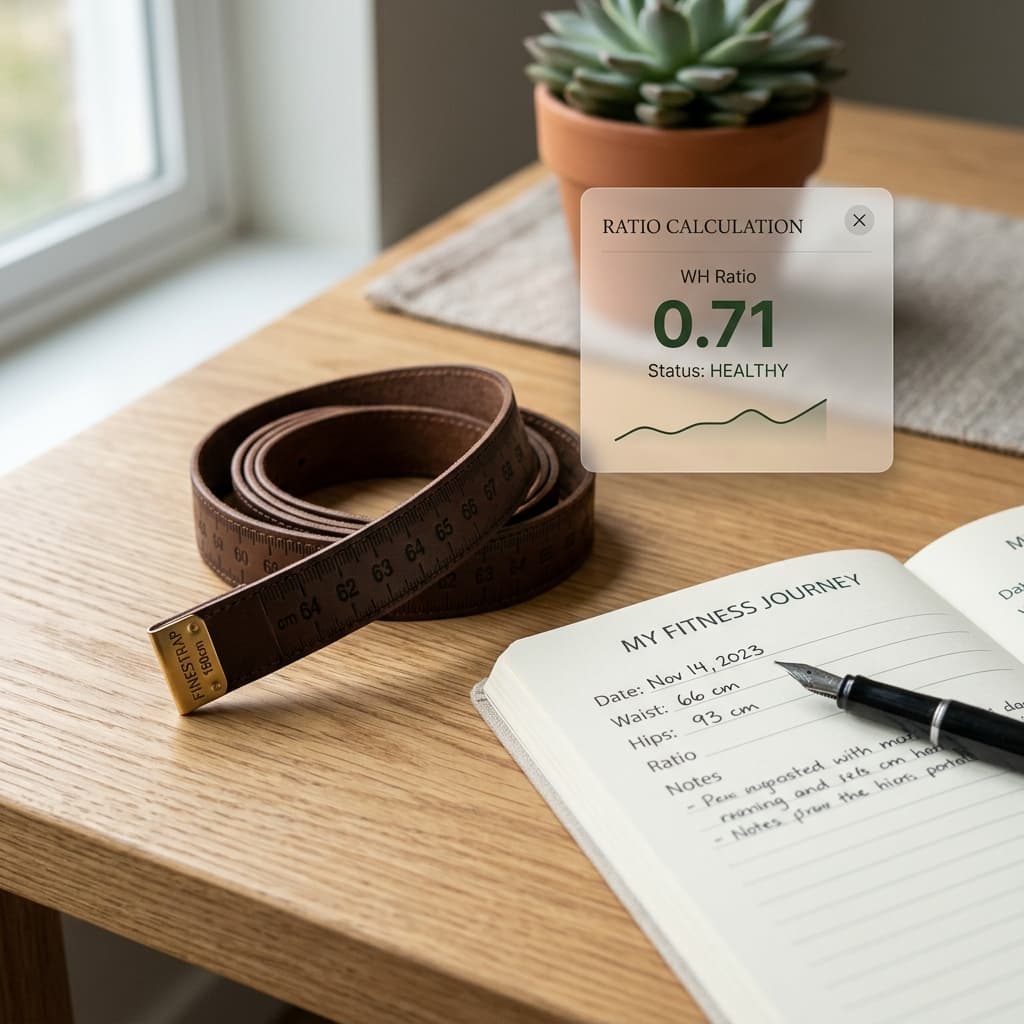
These thresholds apply across sexes and ethnic groups with minimal adjustment — one of the practical advantages of WHtR over waist circumference alone, which uses different thresholds for men vs women and different risk cutpoints for different ethnicities. WHtR's universal threshold (0.5) simplifies the message.
Measuring Correctly: Avoiding Common Errors
Waist Measurement Location
Measure at the narrowest point of your natural waist — typically halfway between the bottom of your lowest rib and the top of your hip bone. Stand relaxed, exhale normally (do not suck in), and measure at the end of a normal exhale. Common error: measuring at the navel (too low) or just below the ribs (too high).
Height Measurement
Use your actual standing height in the morning (height decreases slightly during the day due to spinal compression). Stand against a wall, heels together, and measure to the top of the head without shoes. Most people know this measurement accurately.
Consistency for Tracking
Measure at the same time of day (morning, before eating) for consistent tracking. Waist circumference fluctuates by 1–3cm based on hydration, food volume, and bloating. Weekly or bi-weekly measurements reduce noise better than daily checks.
Improving Your Ratio: Evidence-Based Steps
WHtR improves as waist circumference decreases — and abdominal fat is highly responsive to intervention. The most effective approaches in the research literature:
- Aerobic exercise: 150–300 minutes per week of moderate aerobic activity preferentially reduces visceral and abdominal fat. Studies show waist circumference reductions of 2–4cm in 12 weeks without dietary changes.
- Calorie deficit: A 400–600 calorie daily deficit produces both visceral and subcutaneous fat reduction. Use the TDEE calculator to establish your deficit target.
- Sleep optimization: Chronic sleep deprivation elevates cortisol, which preferentially drives visceral fat accumulation. 7–9 hours per night is the target for adults. This is one of the most underrated levers for waist circumference reduction.
- Reduce refined carbohydrate and alcohol intake: Both disproportionately drive central fat storage compared to other calorie sources. Replacing refined carbs with whole food sources and limiting alcohol to 0–7 drinks per week are effective, evidence-based starting points.
WHtR FAQs
Should WHtR replace BMI?
Does WHtR apply to children?
How quickly does WHtR improve with weight loss?
Author Spotlight
The ToolsACE Team
ToolsACE is an independent platform built by developers and educators committed to making accurate, science-based health calculation tools free and accessible to everyone.