Body Fat Percentage Calculator: How to Measure It Without a DEXA Scan
DEXA scans cost hundreds of dollars. The Navy tape method costs nothing and comes within 3.5% accuracy. Here’s how to measure your body fat at home.

Why BF% Matters More Than Weight
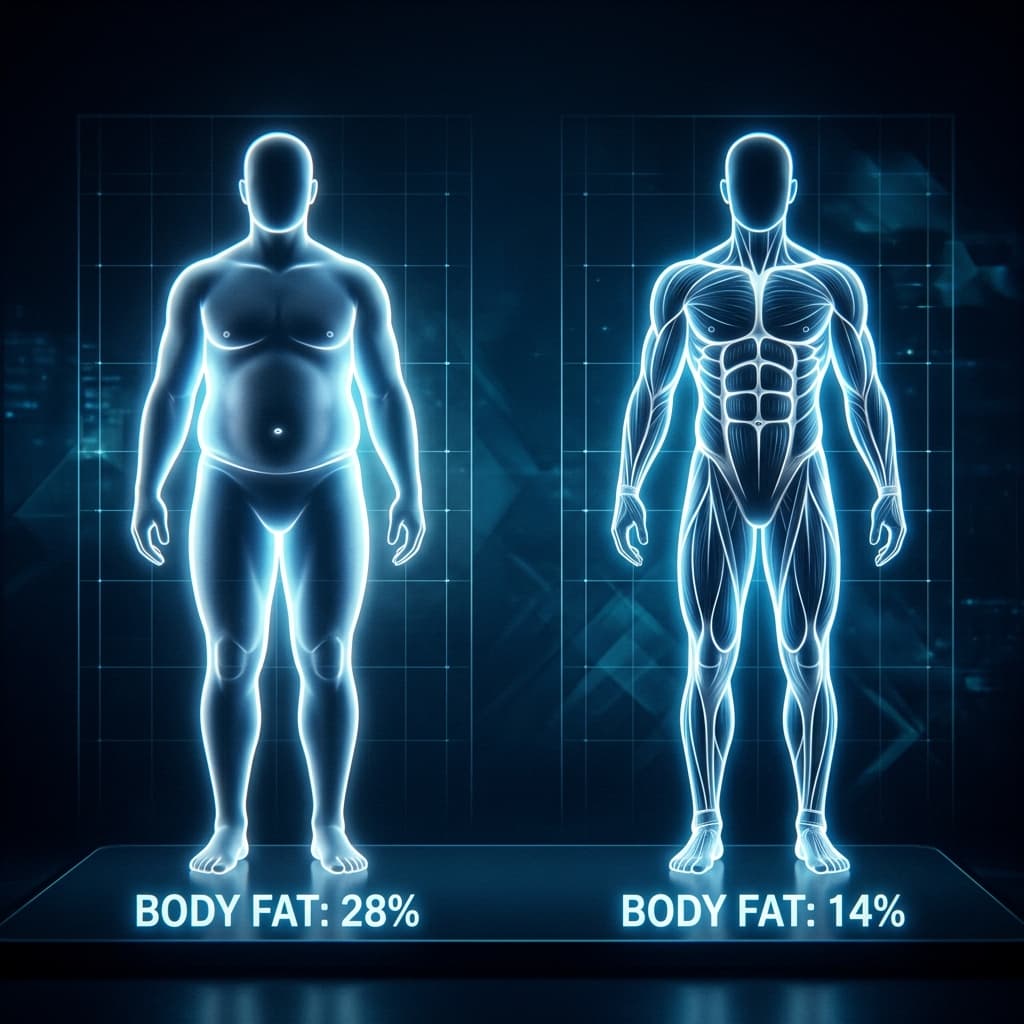
Two people can weigh exactly the same and look completely different — because body composition tells the real story. Body fat percentage separates fat mass from lean mass (muscle, bone, organs, water).
A person at 180 lbs with 15% body fat has 27 lbs of fat and 153 lbs of lean mass. The same weight at 30% body fat means 54 lbs of fat. Scale weight is the same. Metabolic health is not.
Tracking body fat percentage helps you understand whether you’re losing fat or muscle during a cut, gaining muscle during a bulk, and whether your health risk profile is improving over time.
Measurement Methods Compared
Not all body fat measurements are equal. The gold standard is DEXA (dual-energy X-ray absorptiometry), but it costs $100–$300 per scan. Here’s how the common methods stack up:
| Method | Accuracy | Cost | Access |
|---|---|---|---|
| DEXA Scan | ±1.5% | $100–$300 | Medical clinic |
| Hydrostatic Weighing | ±2% | $50–$150 | University labs |
| Navy Tape Method | ±3.5% | Free | At home |
| BIA Scale | ±5–8% | $30–$100 | At home |
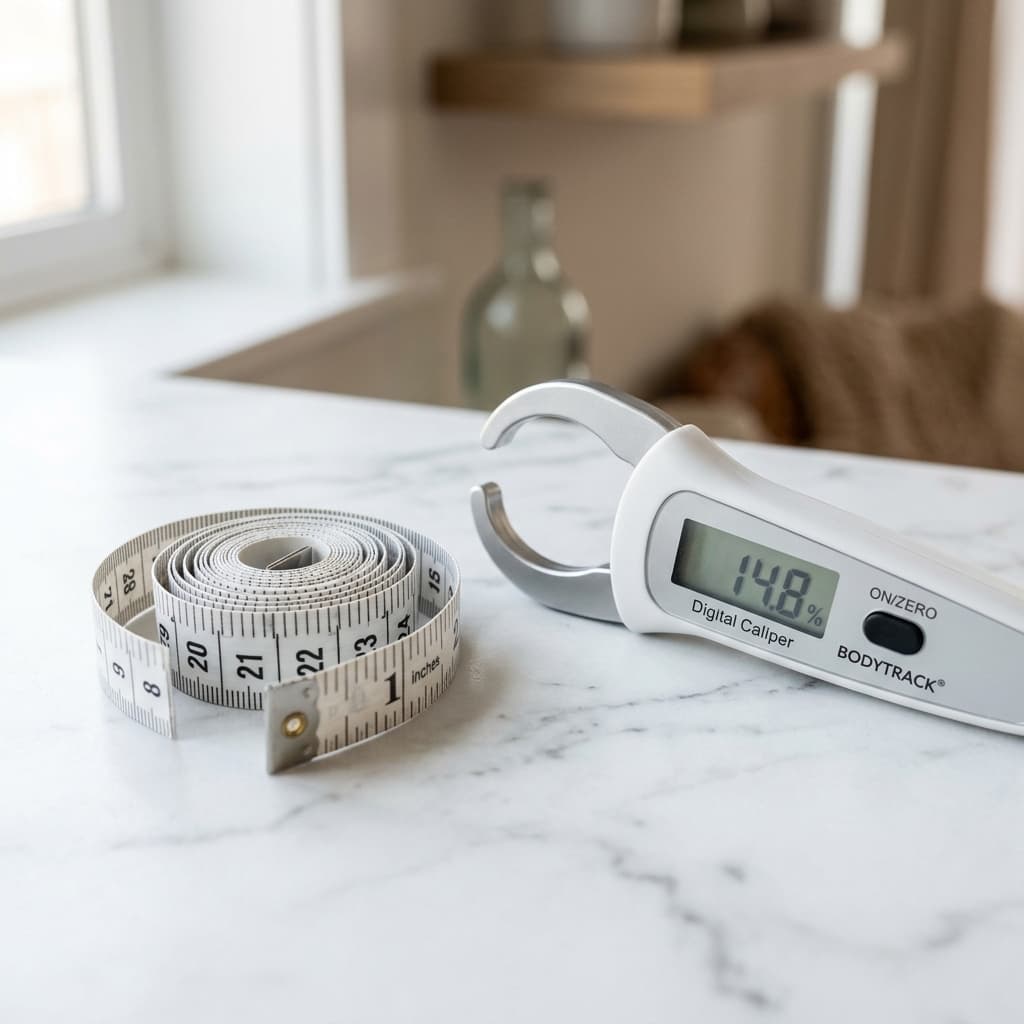
Cost Comparison:
Manual DEXA
$150 per scan, at a clinic
Navy Method
$0 tape measure at home
For most people, the Navy tape method offers the best balance of accuracy and accessibility. BIA scales fluctuate wildly based on hydration — the same person can read 18% in the morning and 23% after a workout.
Healthy Body Fat Ranges by Gender
The American Council on Exercise (ACE) defines these ranges. Note that “essential fat” is the minimum required for basic physiological function — going below these levels is medically dangerous.
| Category | Men | Women |
|---|---|---|
| Essential Fat | 2–5% | 10–13% |
| Athletes | 6–13% | 14–20% |
| Fitness | 14–17% | 21–24% |
| Acceptable | 18–24% | 25–31% |
| Obese | 25%+ | 32%+ |
Gender Differences
Women naturally carry more body fat than men due to hormonal and reproductive factors. A woman at 24% is in excellent shape. Do not compare across genders.
Track Trends, Not Snapshots
Monthly measurements reveal direction of change. Single-point readings are less meaningful than a 3–6 month trend showing fat loss while LBM holds steady.
Women naturally carry more body fat than men due to hormonal and reproductive factors. A woman at 24% body fat is in excellent shape. A man at 24% is at the upper end of acceptable. Do not compare across genders.
3 Measurement Mistakes That Skew Results
Even the Navy method gives inaccurate readings if you measure incorrectly. These three mistakes account for most of the error.
Measuring at Wrong Time of Day
Body measurements fluctuate by 1–2 inches throughout the day due to food, water, and posture. Always measure first thing in the morning, before eating or drinking, and track on the same day each week.
Holding Breath or Flexing
Pulling in your stomach or flexing muscles during measurement skews results by 2–5%. Stand naturally, breathe normally, and measure at the end of a relaxed exhale.
Using a Stretchy or Fabric Tape
Fabric sewing tapes stretch over time and give inconsistent readings. Use a flexible but non-stretch fiberglass or metal measuring tape. A $3 body tape measure from a pharmacy is fine.
Frequently Asked Questions
Is the Navy method accurate enough for general tracking?
How often should I measure my body fat?
Can I build muscle and lose fat at the same time?
Why do BIA scales give wildly different readings?
What body fat percentage is needed to see abs?
Author Spotlight
The ToolsACE Team
ToolsACE is an independent platform founded in 2023 by a team of software developers and educators. Our editorial team writes, researches, and reviews every article and tool guide on this site. We built ToolsACEbecause we were frustrated by tools that required sign-ups, tracked your data, or hid answers behind paywalls. Everything we publish is written by people who use these tools themselves — students, engineers, and professionals who understand the problems they’re solving.