REM Sleep Cycle Calculator: Why Bedtime Math Beats Trying to Sleep Longer
Waking up mid-cycle leaves you groggy for hours. Align your wake time to the end of a 90-minute cycle and feel rested on the same hours of sleep.

The 90-Minute Cycle: Sleep’s Hidden Architecture
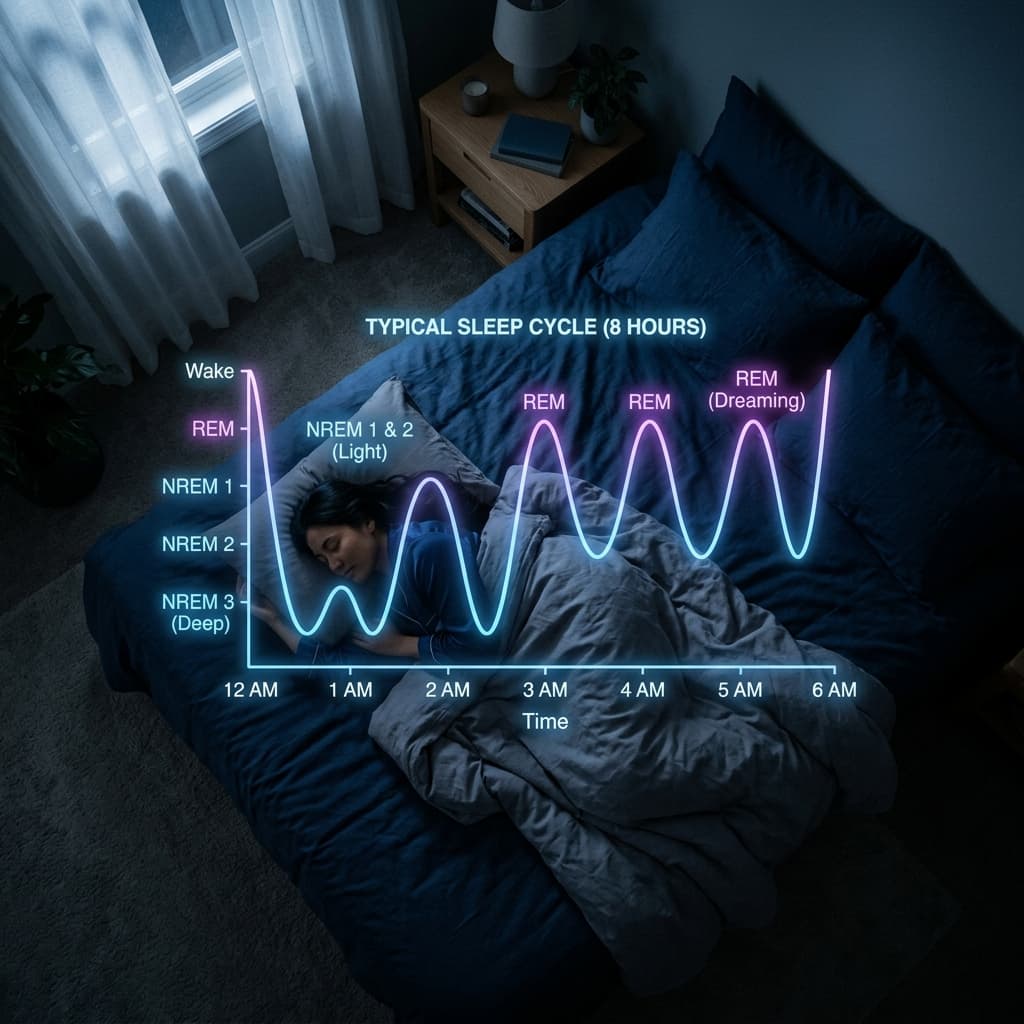
Sleep is not a single state — it’s a series of 90-minute cycles that repeat 4–6 times per night. Each cycle moves through light sleep, deep sleep, and REM. Waking up mid-cycle, especially during deep sleep, causes sleep inertia — the groggy, disoriented feeling that can last 30–60 minutes.
The solution is not to sleep more. It’s to align your wake time to the natural end of a cycle, when your brain surfaces briefly before entering the next cycle. At that moment, waking up feels natural even on fewer total hours.
For a 7:00 AM wake time, the optimal bedtimes are 9:45 PM (6 cycles), 11:15 PM (5 cycles), or 12:45 AM (4 cycles) — accounting for the 15 minutes most adults need to fall asleep.
“Six hours at the end of a cycle feels more restful than eight hours interrupted mid-cycle. Timing your sleep is as important as its duration.”
The Four Sleep Stages Explained
Each 90-minute cycle contains four distinct stages. Early in the night, cycles are dominated by deep sleep (Stage 3). Later cycles contain progressively more REM.
| Stage | Duration | Purpose |
|---|---|---|
| Stage 1 (N1) | 1–5 min | Drowsiness, transition to sleep |
| Stage 2 (N2) | 20–30 min | Heart rate slows, memory consolidation |
| Stage 3 (N3) | 20–40 min | Deep sleep, tissue repair, immune function |
| REM | 10–60 min | Dreaming, emotional processing, learning |
REM Benefits
REM sleep consolidates emotional memories and drives creative problem-solving. It increases with each successive cycle — protecting morning REM is critical.
Deep Sleep Benefits
Slow-wave (N3) sleep drives physical repair, immune function, and growth hormone release. It peaks in the first half of the night — early bedtimes protect it.
REM sleep increases in duration with each cycle. The first REM period may last only 10 minutes; by the fourth or fifth cycle, REM can last 40–60 minutes. This is why cutting sleep short by even one cycle significantly reduces total REM time.
Optimal Bedtimes for Common Wake Times
Add 15 minutes to account for average sleep onset time. These bedtimes place your wake alarm at the end of a complete 90-minute cycle:
| Wake Time | 6 Cycles (9h) | 5 Cycles (7.5h) | 4 Cycles (6h) |
|---|---|---|---|
| 6:00 AM | 8:45 PM | 10:15 PM | 11:45 PM |
| 6:30 AM | 9:15 PM | 10:45 PM | 12:15 AM |
| 7:00 AM | 9:45 PM | 11:15 PM | 12:45 AM |
Duration vs Timing:
8 hrs mid-cycle
Groggy sleep inertia for 30–60 min
6 hrs full cycles
Rested alert from first minute
Most adults need 5–6 complete cycles (7.5–9 hours). Teenagers need 6–7 cycles. Elderly adults often naturally shift to 4–5 cycles with less deep sleep per cycle.
Why REM Sleep Matters More Than You Think
REM sleep is when the brain processes emotions, consolidates memories, and makes creative connections between ideas. Chronic REM deprivation — even from just cutting sleep 30 minutes short each night — has measurable effects on mood, reaction time, and cognitive flexibility within days.
Alcohol, while sedating, dramatically suppresses REM sleep in the first half of the night. Even one drink before bed reduces REM sleep by up to 25%. A single night of REM rebound (extra REM after deprivation) does not fully restore lost REM function.
4 Evidence-Based Tips to Fall Asleep Faster
Keep a Consistent Sleep Schedule
Your circadian rhythm is governed by consistent timing. Going to bed and waking at the same time every day — including weekends — stabilizes the rhythm and reduces the time it takes to fall asleep.
Drop Your Bedroom Temperature
Core body temperature must drop 1–2°F to initiate sleep. A bedroom temperature of 65–68°F (18–20°C) accelerates this process. A warm shower before bed paradoxically helps by causing rapid heat dissipation afterward.
Avoid Blue Light 90 Minutes Before Bed
Short-wavelength blue light from screens suppresses melatonin production. Use night mode or blue-light glasses after sunset, or simply reduce screen brightness to the lowest comfortable setting.
Limit Caffeine After 2:00 PM
Caffeine's half-life is 5–7 hours. A coffee at 3:00 PM still has half its caffeine active at 9:00 PM, delaying sleep onset and reducing slow-wave (deep) sleep even if you fall asleep normally.
Frequently Asked Questions
Is 6 hours of sleep enough if I time my cycles?
Do sleep cycles change throughout the night?
Why do I feel worse after 9 hours than after 7.5?
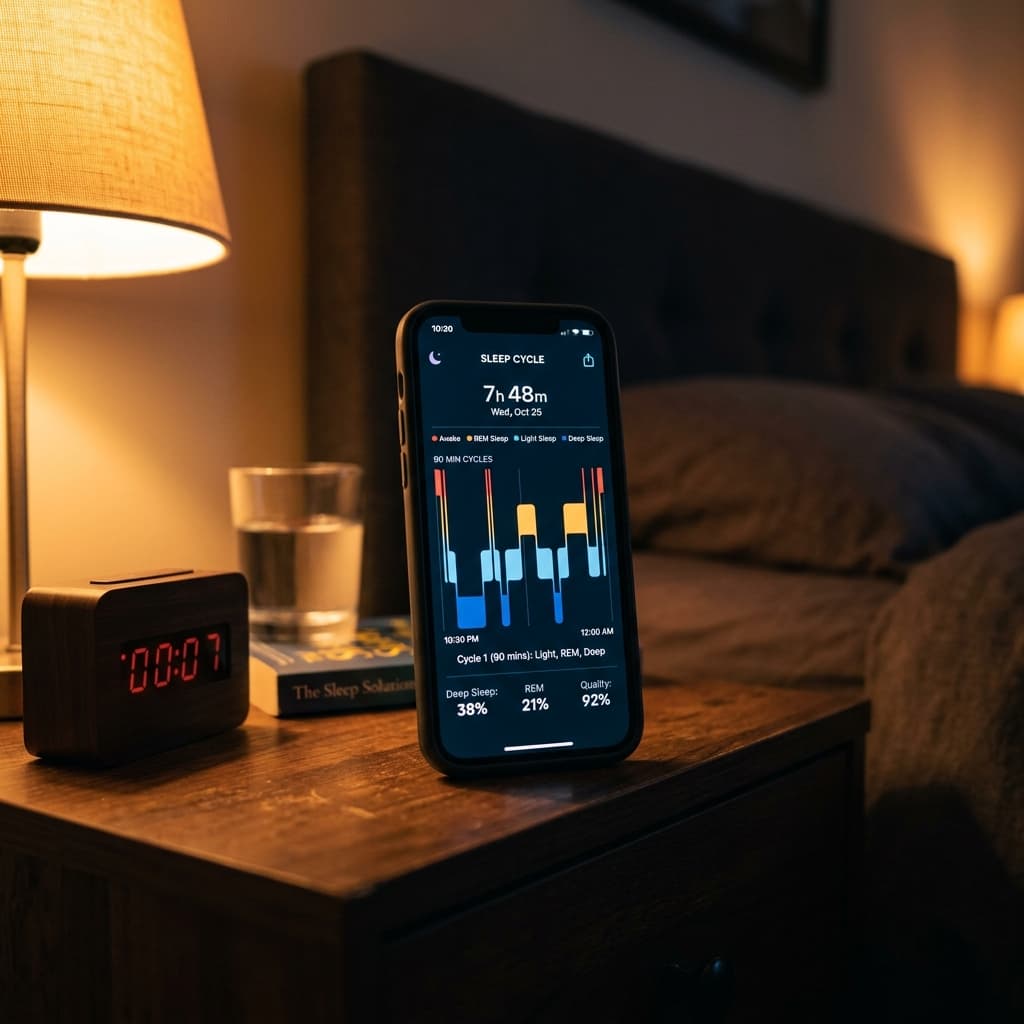
What does a sleep tracker actually measure?
Can I catch up on sleep on weekends?
Author Spotlight
The ToolsACE Team
ToolsACE is an independent platform founded in 2023 by a team of software developers and educators. Our editorial team writes, researches, and reviews every article and tool guide on this site. We built ToolsACE because we were frustrated by tools that required sign-ups, tracked your data, or hid answers behind paywalls. Everything we publish is written by people who use these tools themselves — students, engineers, and professionals who understand the problems they’re solving.